
Ahoy all, Jess here – Classic Sailing’s resident seasick professional sailor! (what a title, eh?) Our seasickness article was first written in 2013. Since then, more has been discovered about the condition and the treatments for it have come on a bit too. So just for you – our 2025 readers – I have updated it to include some new info, anecdotes and some ideas to help you on your first (or fiftieth) voyage with us.
TL;DR – Maybe! But you shouldn’t write off sailing just on a ‘maybe’! There are things you can do to prevent it, and things to ease your symptoms if you do start to feel unwell. This is a long read so skip ahead to the Preventative Measures section if you just want the advice.
“Will I get seasick?” is one of the most common questions we’re asked here at Classic Sailing, especially from our new or prospective sailors. Seasickness can be built up in a way that prevents you from trying something new. When that something new is traditional sailing, which in our humble opinion is one of the most life-affirming and joyous activities there is, then that’s a real shame. Just the prospect of feeling nauseous on board a ship can be enough to put some people off sailing. Many people assume that sailing isn’t for them as they’ll “probably get seasick” – even though they may have never stepped foot on board a boat! Famous cases don’t help matters. Darwin wrote about his experience with it as: “The misery…far far beyond what I ever guessed at…” .
For those of us that do sail, a high percentage have at some point experienced some degree of seasickness. However it’s important to remember that the vast majority of people acclimatise very quickly to life at sea. You may hear a salty sailor boast “I NEVER get seasick”. While this is occasionally true, it’s often quietly followed up with “Well, there was that one time…”
As you’ll see from the anecdotes below, people are not universal and neither is their experience of seasickness. Most sailors have only been seasick once or twice during a whole career at sea. Some may not have experienced it at all (yet!) and some, like me, are all too well acquainted with it! Has that ever stopped me? Nope. And it shouldn’t stop you either.
Trigger Warning: I’m going to be somewhat ‘descriptive’ in the paragraphs ahead, I find the subject and science behind it fascinating! If that’s not for you, I totally get it! You can skip to the Preventative Measures section here.
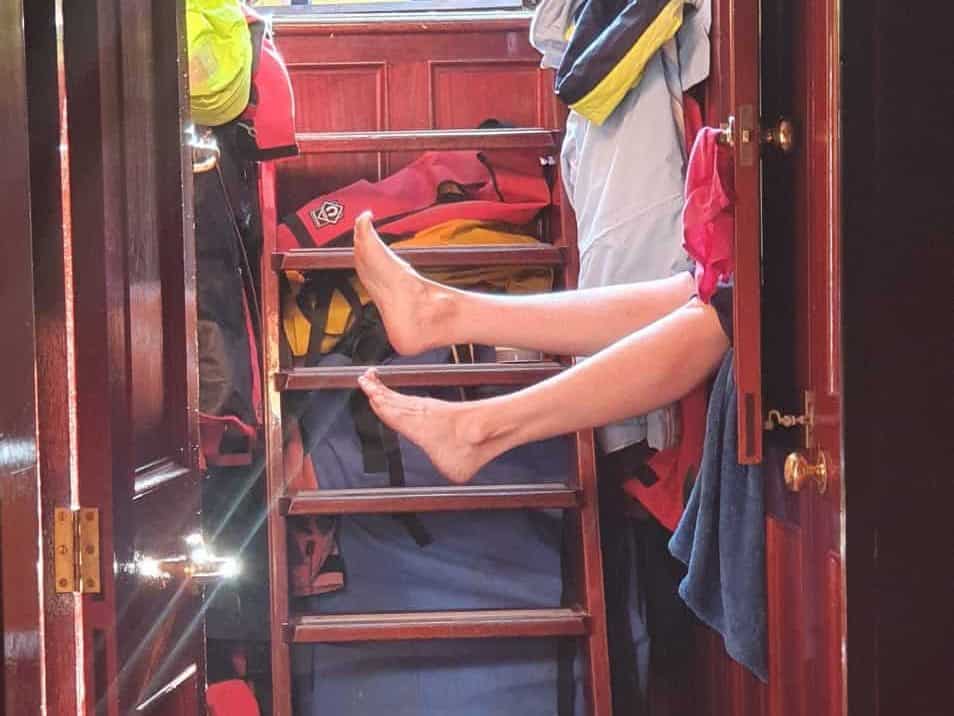
What Is Seasickness?
Back in the 1970’s, research suggested that the age old maritime pastime of ‘mal-de-mer’ was the result of your brain thinking it had ingested poison, which makes a bit of sense when you consider the symptoms: A gradual onset of dizziness, cold sweat and disorientation. Vomiting is the body’s way of removing such a threat, and much of the time, people do tend to feel better once they have emptied their stomachs. Over the years, this theory has largely been disputed, although the precise physiological causes are still being argued. The generally held theory today is that motion sickness is a result of a disparity between the senses; conflicting signals between different biological systems.
The main players are the:
Vestibular System (your inner ear) – senses rotation, tilt and acceleration,
Optical System (vision) – tells your brain what the world around you is doing,
And your Proprioceptive System (muscles, skin & joints) – tells your brain where your body is in space and how it’s interacting with the world around it.
There is also a big link between your brain and gut via the Vagus Nerve – ever felt butterflies in your stomach when you’re excited? You can thank the Vagus Nerve for that!
Scenario:
You’re at sea, it’s not particularly rough, but the swell is coming from the aft quarter of the ship. You’re not tired – in fact, you’ve been sat down for over an hour at the transom, but you keep yawning. You shudder. Hmm, It must be getting chilly so you pop down below to fetch your coat from your cabin. As you reach the bottom of the companionway steps, you notice you’re feeling a bit… ‘off’.
Though you can see ok, by the time you reach your bunk, things look a little strange… You shrug it off but then notice the ringing in your ears and you feel like you’re moving more slowly than usual. Why is every little sound so loud? As you pick up your coat, you feel dizzy and the aroma of lunch cooking in the galley mixed with the smell of Stockholm tar on the bosun’s shelf nearby becomes utterly unbearable to you. You’ve got to get out of here! You seem to ricochet your way back through the boat, bumping into everything along the way.
You make it back up on deck as you begin to swallow what seems like litre after litre of saliva. Your head aches, the sky is too bright. Your shipmate asks if you’re ok but you can’t answer them, another informs you that you’re looking quite pale – you wish they’d just leave you alone. You lean over gunwale, holding on tight to the rail, you stare at the grey-green water swirl and twist below you when finally it’s all too much…
With your chin resting on the cap rail and a cold sweat beading on your forehead, you watch your breakfast drift away below the waves. Despite your wobbly knees, you find your feet as you start to come back to life – actually you feel kind of fantastic! Well, apart from that low-level headache at least. Someone hands you a glass of water. Congratulations, you’ve been seasick!

So what’s happening here?
The semi-circular canals inside your inner ear are filled with fluid. On a moving boat, this fluid sloshes and overstimulates balance sensors. Meanwhile, your muscles – even on a relatively calm day at sea, are constantly adjusting to help keep you sitting or standing upright. Your eyes on the other hand, when fixed on sometime on the same plane as them (and so appear to not be moving) – such as something on the deck or the horizon, are telling your brain nope, no movement to report here. This conflict of messages means your brain can’t reconcile the inputs, the body responds with classic motion sickness symptoms: nausea, cold sweat, dizziness, disorientation and sometimes vomiting.
Certain groups of people are more prone to seasickness; children, pregnant people, those who get migraines and those prone to other inner ear issues such as vertigo. Interestingly, people with damaged vestibular systems, such as the profoundly deaf, are seemingly immune to motion sickness! There is a fascinating article from NASA about the 11 deaf men who helped shape NASA’s understanding of the effects of space travel on the human body, I recommend a read, here’s a snippet that made me chuckle:
…Another experiment, conducted in a ferry off the coast of Nova Scotia, tested the subjects’ reactions to the choppy seas. While the test subjects played cards and enjoyed one another’s company, the researchers themselves were so overcome with sea sickness that the experiment had to be cancelled.
However, there are things that everyone can do to lower their chances of feeling ill at sea in the first place. If you do start to feel seasick, there are also things you can do to help the symptoms pass.

Preventative Measures
Luckily, there’s a variety of options available that may help to prevent seasickness. People are of course all different and what works for one may not work for someone else. Several medications are available, they work by targeting the effect the vestibular system inputs have (as medications that affect the visual or muscular inputs wouldn’t be a great option onboard a boat!). You may need to do a bit of trial and error with these to find which ones work best for you!
Here in the UK we typically have access to:
Scopoderm patches (Hyoscine)
Stugeron tablets (Cinnarizine)
Kwells tablets (Hyoscine – faster-acting than patches, but shorter duration)
Avomine or Phenergan tablets (Promethazine)
Hyoscine (Scopolamine & Kwells)
How it works: Anticholinergic. It blocks muscarinic receptors in the vestibular system and the brain’s vomiting centre.
Effect: Reduces the brain’s sensitivity to mismatched balance signals.
Pros: Very effective, especially patches (slow release over 72 hours). Tablets are cheap and readily available from most supermarkets and pharmacies.
Cons: Patches are expensive, only available over the counter and not all pharmacies stock them. Side effects can include drowsiness, blurred vision, dry mouth, difficulty urinating.
Cinnarizine (Stugeron)
How they work: Block histamine receptors in the vestibular nuclei of the brainstem. Histamine is a key neurotransmitter in balance and nausea signalling.
Effect: Dampen vestibular input so the sensory mismatch doesn’t trigger the vomiting centre.
Pros: Widely available, effective for many, fewer side effects than hyoscine. Stugeron is often the go-to in Europe.
Cons: Can cause drowsiness in some and a dry mouth.
Promethazine (Phenergan, Avomine)
How it works: Strong antihistamine with anticholinergic effects.
Effect: Powerful anti-nausea action.
Pros: Good if other drugs fail.
Cons: Very sedating — often used more as a last resort, or to help someone sleep through the worst.
Some people also have good results with regular allergy antihistamines, such as Piraton, but if you want to give these a go, look for the ones that don’t claim to be non-drowsy.
Acupressure Bands
These are little wrist bands that contain a hard plastic ball, which is placed against your inner wrist. The theory is that the small amount of pressure these apply stimulate nerves in the wrist that connect indirectly to the nausea centres. Evidence is mixed, but anecdotally, some of my closest sailing friends swear by them!
Wellbeing Ahead of Your Voyage
Before you sail it’s a good idea to make sure you’re well rested and hydrated. This helps reduce overall stress on the body, making you more tolerant of sensory mismatch. Reducing anxiety is also key. Confidence, distraction, or even just being told “most people adapt after a day or two” raises the threshold at which symptoms kick in. Tell yourself that everything will be fine! Seriously. People who step aboard with a ‘feeling’ that they’re going to get seasick are much more likely to feel it than those who have told themselves the opposite. If you don’t LOOK for it, you probably won’t find it.

Coping Strategies
Once you’re aboard – medicated or not – if you start to feel the onset of a bout of seasickness there are things you can do (and things you should avoid!) to help them subside.
“I’ve Never Seen Anyone Vomit on a Dolphin!” – AKA, Occupy You Mind
I wish I could remember who said the dolphin quote to me, I still laugh when I think of it – and they weren’t wrong! I’ve crewed on vessels on days that just seemed designed to make people feel rotten, then someone shouts “Dolphins! At the Bow!” and suddenly everyone jumps to their feet and forgets they feel unwell! If your mind is occupied you’re much less likely to feel ill.
For some people, one of the absolute best remedies when they feel the first twinge of seasickness is to take the helm. Helming not only gives you something to do, but it keeps you looking up and staying engaged and the responsibility and confidence that helming brings can seemingly override the symptoms. For other people, it can make make them a bit worse – if this is the case, hand the helm back over to a member of crew and go for a walk around the deck – check to see if any lines need coiling, see how many steps it is from bow to stern – it doesn’t matter, just move and keep busy.
You could also have a go at ‘riding the ship’. Stand up on deck somewhere safe (clip yourself on if the crew ask you to), with a good hold on something solid. Keep yourself upright by swaying with the motion of the ship. This keeps your head much more stable, thereby reducing nausea, and helps your body make sense of the movement. You’ll find you’re steadier on your feet if you do this regularly.
Stay Up On Deck
Once you’re below deck you have no point of reference to visually gauge the movement of the ship, other than perhaps a rogue, bruised apple, rolling back and forth across the floor! Going below deck is more often than not the trigger that starts a bout of seasickness – even the most iron-stomached seadogs can feel a bit queasy when they’re down below in certain sea conditions – many of us just don’t dare go down at all if they can help it.
There’s also plenty of smells you might encounter below deck on a moving ship that can contribute to queasiness. If the ship has been heeling over from one side to the other, it can disturb any stagnant water in the bilge and the smell can be quite unpleasant. Many vessels have a bosun’s locker containing oils, tallow, tars and paints that all have strong odours, especially if they’ve been sloshed about a bit. If the engines have been on there may be a diesel-y scent lingering and if the cook is working on dinner in the galley, the scent can be a bit much when you’re feeling a bit off. Many people feel better straight away once they’re back up in the fresh air.
Time for a Snack
It may seem counter intuitive, but eating is a really good way to keep seasickness at bay. Little and often is the key, rather than big meals. I remember my first very first voyage, we had all been fine for the first few days and then the swell increased. Half the guests were unwell that day, myself included. The Mate was walking around with the fruit bowl trying to convince us to eat a pear or an apple – I remember thinking eating an apple was the last thing in the world I wanted to do in that moment, but she kept on at us and we all felt better for it. I always keep snacks on me when I’m sailing now, my pockets are full of sweets and cereal bars!
Ginger can help a lot — I swear by Gin Gins from Holland & Barrett. They’re chewy, sweet and fiery – the ginger helps to calm your stomach, the sugar gives you a burst of energy and the chewing gives you something to focus on. Many ships have a stock of ginger biscuits, crystalised ginger, lemon and ginger tea etc. Just ask the crew.
It’s also really important to stay hydrated – good advice in general really, but even more so if you feel unwell. Like snacking, drink sips of water often rather than guzzling a lot at once.
Things to Avoid
Nicotine, alcohol, very rich food and too much caffeine – most ships are no-smoking zones and you’re not permitted to drink while underway anyway. A sweet to snack on and a cup of tea is absolutely fine for most people. Cream teas after lunch and 3 trips to the freshly brewed cafetiere on the other hand is a different story!
Try not to get cold too – if you start feeling shivery, your Proprioceptive System (muscles, skin & joints remember) can go into overdrive. Ask someone who isn’t feeling unwell if they could grab your coat or a blanket for you – don’t try and go below deck yourself.

When All Else Fails
Sometimes, even if you’ve done everything right – taken your Kwells, eaten your Gin Gins, sipped your water, stayed busy on deck – the seasickness still comes for you. It’s time to talk to the crew and find a comfy, quiet spot – better out than in, as they say!
The crew may ask you to clip on a tether between your lifejacket and a jackstay (safety first – you may become dizzy and disorientated). Sit on the leeward side of the boat if you can (the side closest to the water) – else you may be handed a broom once you’re feeling better to clean your vomit off the side of the ship! It’s not a great look when you arrive in a new port… For many sufferers of seasickness, actually being sick tends to make you feel better straight away, though it’s important to continue to look after yourself as it can come back again.
Seasickness can make you very tired. If you’re cold and feeling very nauseous, it may be best to try and sleep it off. This means heading down below to your bunk, which can feel worse to begin with. Ask the crew for a bucket or the like to keep with you just in case. Make sure you have your water bottle nearby and try to sleep on your side. If the sea conditions are rough, try and sleep as close to the centre of the ship as you can – many ships have their cabins and bunks towards the front so you may find it less roly and more comfortable on the saloon sofa.
Rare But Serious
It’s rare to be unwell with seasickness for prolonged periods of time, as your brain and body adapt quickly to life at sea and the motion of the ship. If it isn’t getting better after a couple of days or if you’re very unwell, you need to talk to the crew. Dehydration is a real risk in these circumstances.


Ask a Sailor – Anecdotes From My Seasick Friends
As I said above, people experience seasickness in a variety of ways. I caught up with my friends at Balancing the Boat – a group of amazing sailors and maritime enthusiasts – about their experiences, asking 3 main questions: Do you get seasick? If so, what is it like for you? What helps? What’s your advice for a new sailor who’s concerned about seasickness? You can see some of their answers below!
| Do you get seasick? What is it like for you? | What helps to prevent or alleviate symptoms? | What’s your advice to a new sailor re. seasickness? |
| Only significant time when I was 16. Feel a bit queasy on rare occasions. | Being on the helm and ginger, | Take a tablet or two before setting off and bring all the help you can get; ginger, tablets, wristbands. Usually enough to keep it at bay without using anything else as you know how prepared you are. |
| Yes, I get a bit drowsy. | Give me a job, helming is great. Drinking water, electrolytes sachets, covering my ears with a buff / neck tube. | Stay calm sail on, anxiety makes it worse! |
| I didn’t used to but I finally found the perfect sea state that got me, and it shattered the unwavering mind-over-matter belief I had that it didn’t affect me! | What works for me is constantly grazing so my stomach has something else to concentrate on (the pockets of my foulies are full of biscuit wrappers!) | That they might, but you adjust. That having something to focus on and staying above deck help, (and staying warm and well hydrated and well rested help heaps too), and that it’s nothing to be ashamed of- everyone’s got their perfect storm, they just might not have found it yet. |
| I only suffered twice. Once when I hadn’t eaten all day and only had a banana and glass of wine before a rough sail (totally my fault). Second time was when I took sea sickness tablets for the first time (I’ve never taken them again). | Make sure to eat properly before a sail and get proper rest if possible. Sit in the cockpit and if all else fails lie down and sleep. | If you are planning to take tablets try and do a test run before sailing to make sure they don’t disagree with you. As soon as you feel queasy take action, the longer you wait the worse it is. Get fresh air and eat properly. |
| No, not in the traditional sick-over-the-side way, but I do get headachy and really lethargic from time to time. | A good nap if I’m able to, food food food, loads of water and keep warm! | It may or may not happen, and if it does, for most people it doesn’t last long! Chances are you’ll have an amazing crew who will take action right away to make sure you’re comfortable so be sure to let them know as soon as you start feeling ill – they’ll know all the tips and tricks! |
| Not really but if I wake up for watch in the middle of the night and get shaken around on foredeck I can get queasy. | Making sure you’re hydrated, peeing regularly and grazing on food. Don’t neglect your basic needs. New discovery is that chewing gum can work wonders! Also if you’re able to sleep more to minimise symptoms. | Being seasick doesn’t define how good a sailor you are, but try to plan for it to avoid discomfort. If you get bad seasickness you may be suited to longer passages or deliveries as even those with the worst seasickness find their sea legs after around 3 days at sea. I’ve seen people rise from the dead in this way multiple times. |
| I think I’d be prone to sea sickness (can’t read in a car and mainly sleep if I’m a passenger.) I’ve not done much sailing in challenging conditions so I’ve not tested the theory too much. I have felt queasy down below on a monohull even in calm waters. | I stay on deck at every opportunity and keep my eyes on the horizon. I also stick to savoury snacking on a passage rather than meals and sleep when I can. | My advice is to sail on a catamaran! My dad’s advice (who was terribly seasick) was that the best cure for seasickness is to sit under a tree! |
| I have, mostly when we used to race overnight to France… Mixture of the smell of the burnt gas/smells off the stove. | The hazardous bit for me was getting from lying down off watch to being up on deck. So I would make sure everything was laid out ready to step into / keep foulies on to sleep. To prevent: Lie down, eat snack, be on deck, deep breathing To Ease… Ginger! | Try and join the boat the night before, so your body starts to adjust…stay warm, don’t go down below if you feel a bit sick. Tell someone, a problem shared can mean you have less to worry about. |


And Finally, Remember…
- The crew want everyone on board to enjoy themselves. They will plan the voyage in order to reduce uncomfortable conditions.
- There is no shame in feeling queasy. Talk to the crew at the very first signs so they can help you.
- It will pass. Even if you do feel seasick, know that it won’t last forever. Once it’s over you’ll be acclimatised and unlikely to get ill again during your voyage.
- Keep warm, this is very important. If you find it more comfortable on deck you must have warm clothing.
- Talk to us: if you are still worried about seasickness then get in touch. We can help you find voyages in sheltered waters that might suit you better.

If you’re still concerned, there are a few voyage types which are fairly safe bets. Try a shorter voyage to get a feel for things. Round trips are also fantastic as they provide the skipper with complete flexibility. They can choose the most comfortable wind directions and the most sheltered seas possible, given the conditions. Facing your fear and getting out on the water will be 99% of the battle already won. Finally, sail in sheltered waters, such as the Stockholm Archipelago or inside Plymouth Sound. The biggest waves you’re likely to experience there are the wash from a passing ferry!


