
| Embark | Disembark | Vessel | Duration | Voyage No |
|---|---|---|---|---|
| Mon 28-06-2027, 15:00Ullapool, Scotland | Wed 07-07-2027, 10:00Stornoway | Tallulah | 9 Nights | TH280627 |
Ullapool is North of Skye and the Torridon Mountains. As a summer base it gives us close access to the Northern islands of the Outer Hebrides and the Shiant Islands. Our aim for this 9 day sailing expedition is to reach St Kilda, but there are plenty of stunning alternatives for the adventurous sailor.
After using Lewis or Harris as a stepping stone, the Sound of Harris takes us through to the Atlantic side of the Outer Hebrides. Taransay and Pabbay are close by, but St Kilda lies 35 miles out into the ocean, so the sea state and swell direction has to be right to anchor there. Alternatives include options all around Skye and further South down the Outer Hebridean chain.
The voyage ends in Stornoway with twice daily ferries back to Ullapool, or flights back to Edinburgh, Glasgow, Inverness or even Benbecula at the Southern end of the island chain.
See the voyage description for more.
This is very much a summer expedition for Tallulah – sailing to Scotland for the first time. Our skippers and mates are not new to the sailing ground, but we are definitely excited to be returning with fresh eyes. We cant wait to explore ashore and see our beautiful sea green pilot cutter anchored with a mountain backdrop.
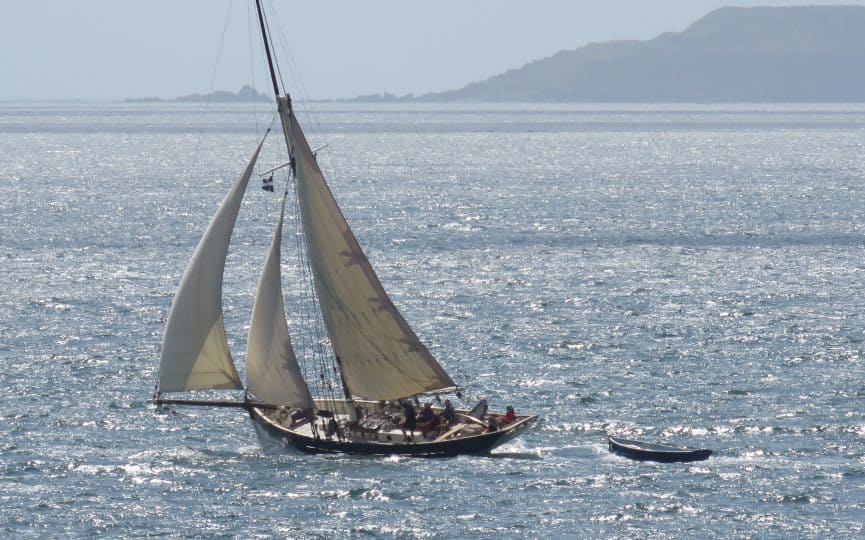
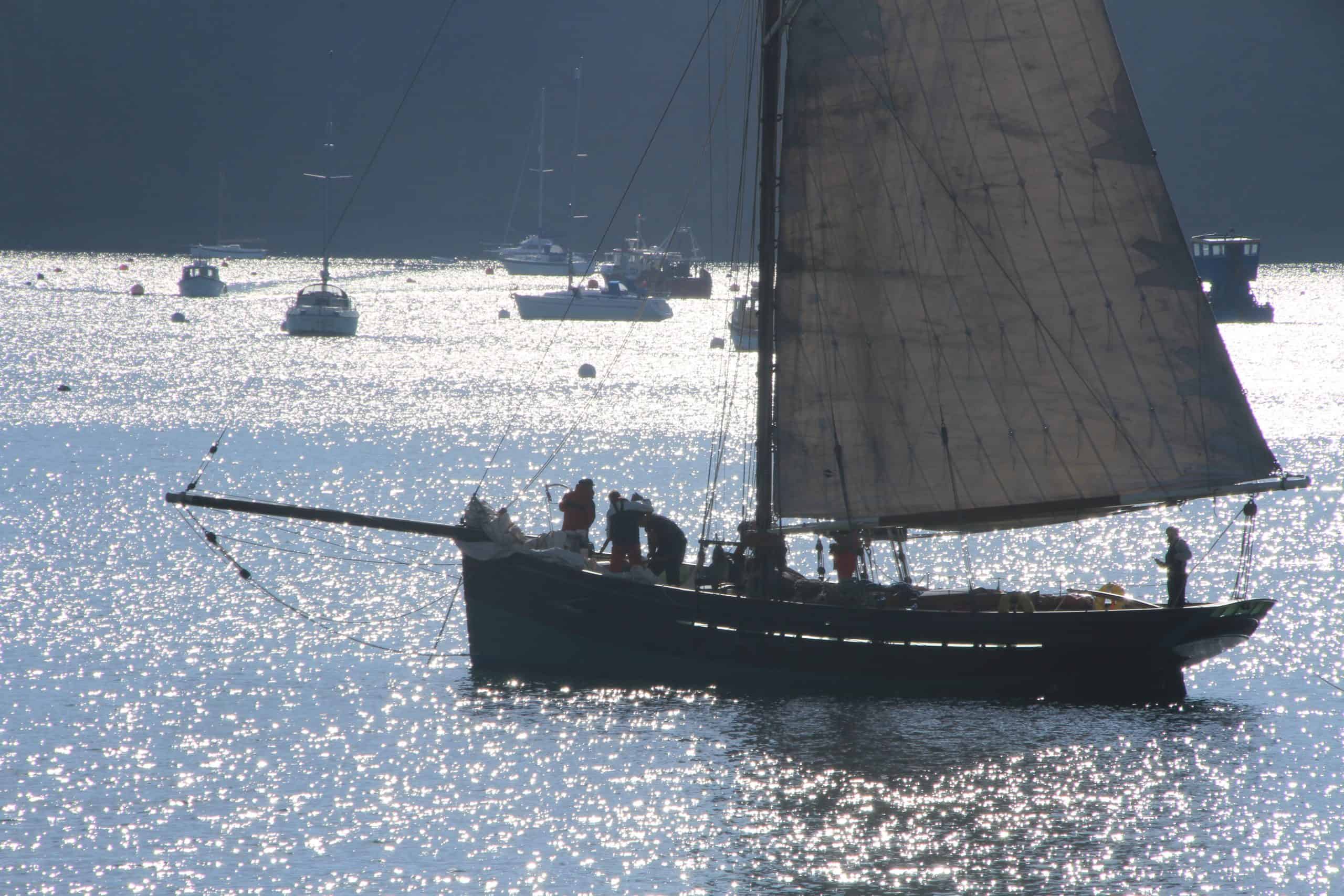
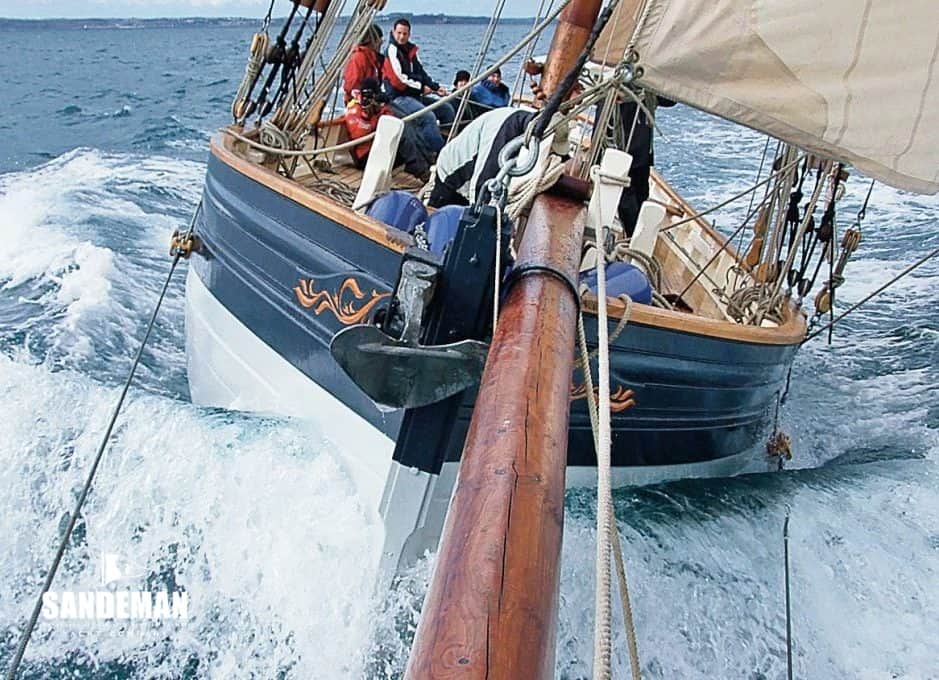
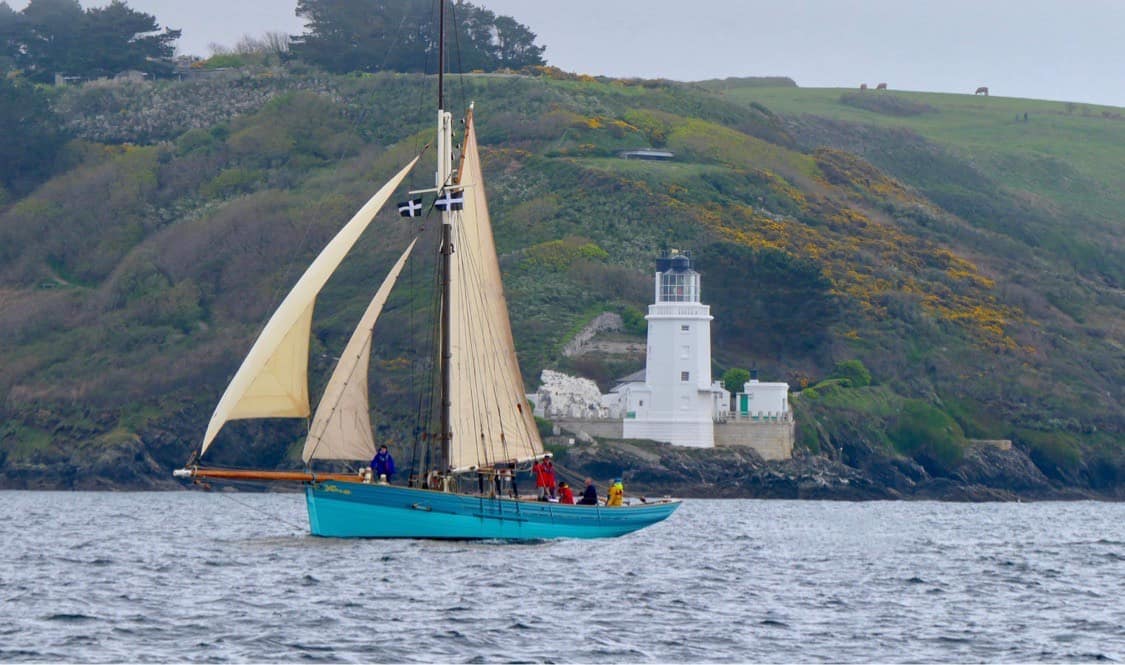
Tallulah is a traditionally rigged sailing boat, with sloping decks when the wind blows, but at only 22 ton and topsails on a 60ft mast, she can also glide well in light winds and flat seas. She carries 3 different size jibs and we can reef the main and the staysail.
These are hands on participation voyages with a skipper and mate, ideal for intermediate and experienced sailors. If you are a keen, outdoorsy beginner who is agile enough to learn to sail on sloping decks and can cope with landing by small boat in remote anchorages, they we can teach you. Back in our home waters Tallulah crew regularly teach RYA courses with beginners through to budding skippers, so we will always involve you all in the days plan.
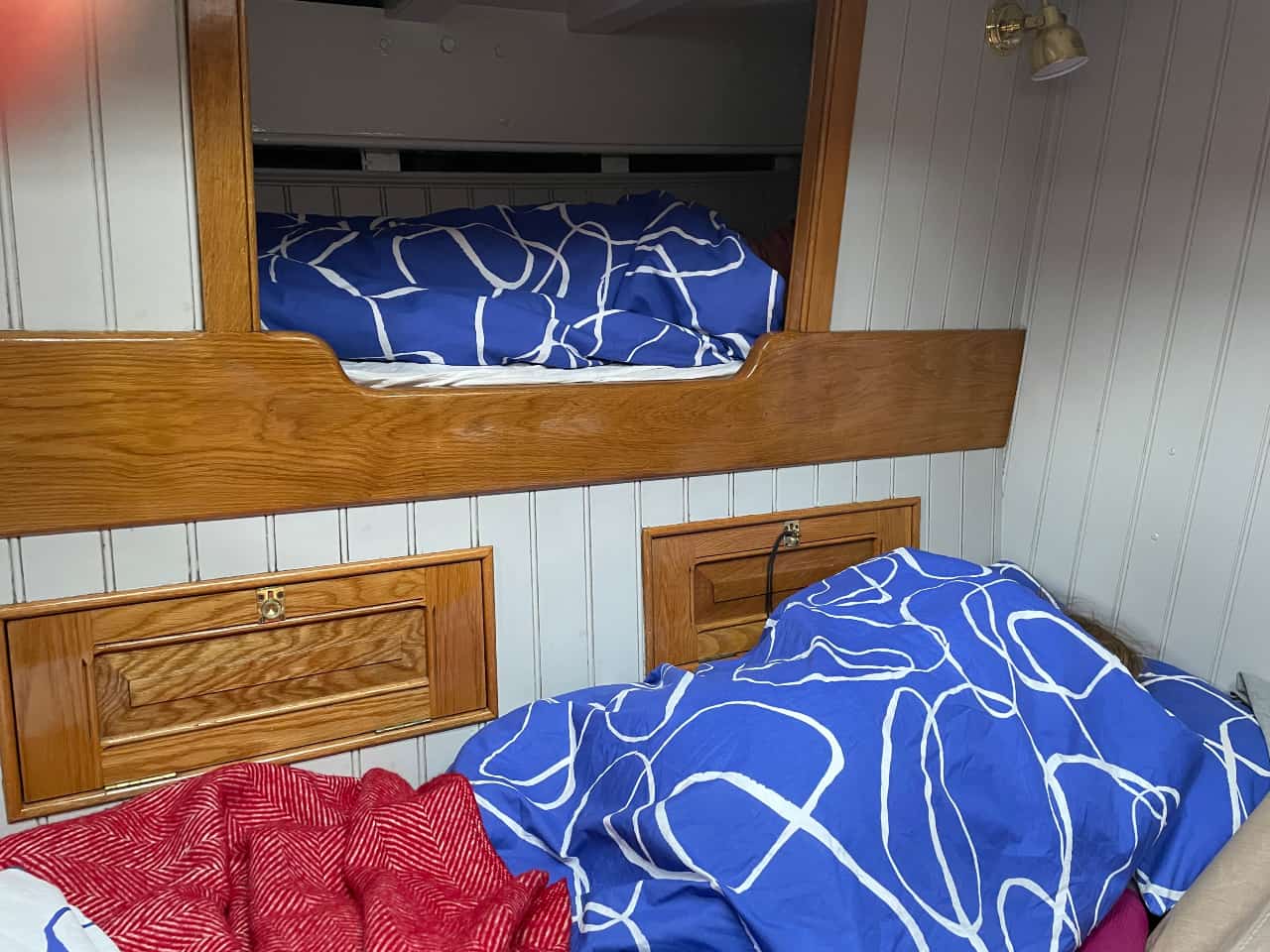
max 6 guests in 4 singles and one double berth. Solo travellers welcome.
Wilderness lovers, frontier types, wildlife enthusiasts, walkers, sailors who want a taste of the wild ocean with a good chance of getting to St Kilda. This is not for bucket list obsessives. St Kilda is not always reachable, so you do need a flexible attitude to where we go on this expedition and be ready for a bit of rough. Not so ideal if you are prone to seasickness or don’t like walking ashore on remote islands or peering over precipitous bird cliffs.

| Vessel type / Rig | gaff cutter |
| Guest Berths | 6 |
| Beam | 13.5ft |
| Draft | 7ft 5 |
| Deck Length | 44ft |
| Overall Length | 59ft |
| Tonnage | 22 tons |
| Year Built | 2008 |
Ullapool is North of Skye and the Torridon Mountains. As a summer base it gives us close access to the Northern islands of the Outer Hebrides and the Shiant Islands. Our aim for this 9 day sailing expedition is to reach St Kilda, but there are plenty of stunning alternatives for the adventurous sailor.
After using Lewis or Harris as a stepping stone, the Sound of Harris takes us through to the Atlantic side of the Outer Hebrides. Taransay and Pabbay are close by, but St Kilda lies 35 miles out into the ocean, so the sea state and swell direction has to be right to anchor there. Alternatives include options all around Skye and further South down the Outer Hebridean chain.
The voyage ends in Stornoway with twice daily ferries back to Ullapool, or flights back to Edinburgh, Glasgow, Inverness or even Benbecula at the Southern end of the island chain.
Tallulah is a 2008 replica of the seaworthy 19th Century working pilot cutters that plied their trade in the Western Approaches to Lands End. She makes a great expedition ship, but this is a a small group adventure with only 6 guests participating as crew. Expect to be fully involved in the sailing, and we also hope to be sharing the exploring ashore with you too, where we can.

Pilot cutter Tallulah is 44ft on deck and 59ft overall. Bought specifically as a perfect boat to run charter holidays by her current skipper/owner Debbie Purser in 2021, Tallulah has quickly been building up a following – with voyages in Cornwall, the Isles of Scilly and Brittany in the last 5 seasons. Before that Debbie ran charter voyages on ‘Eve of St Mawes’ for 23 years.
With a female skipper/ owner and plenty of adventurous relief skippers and mates we try and cultivate a fairly energetic and healthy vibe on board. Tallulah runs yoga and watersports voyages, wild swimming, connect with nature – wellness breaks, sailing and walking and lots more back in Cornwall, so we like to think we can give your energy levels a boost the wilds of Scotland too. Attitude rather than age is the mantra amongst our sea staff. Tallulah’s mix of guests over the last 5 year have been 47%- 51% female, so we like to think we have the social and gender mix right too. Its not all physical action. This beautiful cutter lures musicians, artists, climbers and film makers too. The people that come, make every voyage unique.

We don’t claim to be experts on Scotland. Tallulah’s two main skippers have sailed here on other boats, but not in a while. This is just us and a great bunch of guests heading Northwards – for the first time with Tallulah as our floating home. We are calling it an expedition because there is nothing jaded and predictable about it. There are many, many anchorages we have never been to, and a few favourites we haven’t seen for years long to return to. Come and explore with us as we see the seascapes and landscapes with fresh eyes.
Debbie has been lucky enough to have explored Scotland on other charter vessels over the years from Loch Scavaig and the Shiants to Orkney, Fair Isle and the Shetlands. Anthony has worked on Eda Frandsen in Scotland and is a commercial fisherman in winter, so he knows his seafood. We will be headhunting a few regular guests and specialists that have other talents to add to each Hebridean voyage in 2027.
The mate and skipper both love cooking so we take turns at cooking. We love seafood and all cuisines, but we don’t claim to be gourmet. It’s just wholesome fresh food, not a competition. We won’t force you to eat pudding and we have a decent vegetarian range of meals if you tell us.

There is definitely not a set itinerary for Tallulah. We view the chart (and ordanance survey maps) with eyes wide open at the options. The choices are always based on swell, wind direction and landing opportunities. The distances run each day are shaped to the guest crews experience, energy left after the day before and where we think you will find special moments, vistas and connections with nature.
Tallulah has a great bookshelf for us all to understand what we are looking at from birds to whales or eagles. Delve into past explorers or the Viking or Celtic history of the isles and seaways.

Through the Sound of Harris and beyond the protection of the Outer Hebrides chain of islands lies the remote St Kilda archipelago, 43 miles offshore the nearest Hebridean shore.
This sailing voyage leads to sparsely inhabited islands, tiny fishing villages, deep lochs and rugged cliffs that will be appealing to nature lovers looking for puffin, sea and white tailed eagles, whales and other cetaceans. The hundreds of islands of the Hebrides have their own character, are very isolated and therefore entirely self-reliant. This area is rich in seabirds, which usually breed on the steep cliff faces.
On a sailing voyage we never use the word itinerary, as skippers will always be aiming for the best sailing and shore landings for the forecast and most idyllic or sheltered anchors and ports. They are as keen as you to include some of the highlights described below, but you have to go with Mother Nature, not fight her. The description below is based on what we think might be possible, based on past trips, or experience, but nothing is guaranteed on a sailing voyage. St Kilda can often be untenable to anchor off due to ocean swell and in those conditions there are much better places to tuck up and anchor.
Ullapool, in the picturesque Loch Broom, is North of Skye, North of Torridon and level in latitude with the Shiant Islands. Just across the infamous Minch is Harris and Lewis. It is an open water passage with strong tides but only 43 miles across and lots of deep lochs on these two big islands

The lovely Shiant Islands would be worth a visit. This is one of the biggest colonies of puffins and by June their chicks have usually hatched and the skies are wheeling with frantic puffins, diving for sand eels. Last time Debbie was on the Shiants she saw two fish eagles (white tailed eagles).
The now uninhabited island group is also the famous retreat of Adam Nicolson. His family left him steward of the islands at 21 and he wrote a book called Sea Room about his struggles and time in the stone bothy that still stands on the main island. We all fancy the tiny cottage as a holiday escape.
On the way to Ullapool the remote Loch Ewe Boatyard is on Debbies hit list. It has been responsible for some beautiful restorations of working fishing craft and the yard owner Alistair studied boat building at the Boat Building Academy in Lyme Regis.
In Ullapool there is a community led organisation raising money to restore an 80ft Zulu. It is very early days We hope to catch up with their progress.

Ideal time of Year for Wildlife & Seabirds
The waters surrounding the Hebrides and St Kilda are rich in sealife and nutrients. During the crossings between the different islands the chances are high that we will spot whales and seals and this is a great time of year for ocean seabirds as they come into the high cliffs to breed. Twenty species of birds are breeding at St. Kilda, with over a million birds sitting on about 300.000 nests.
A quarter of all the Northern Gannets on the Northern Atlantic totalling about 60 000 pairs are breeding on Boreray and the Stacks. Atlantic Puffin are the most common seabird in the archipelago; there were once millions of pairs but a declining fish population has dramatically reduced there number. St Kilda has its own unique St. Kilda Wren, with a slightly bigger beak and a different song; it is estimated that there are 250 breeding pairs and a major sighting for any ornithologist or amateur bird watchers.

St Kilda – a holy grail for adventurous sailors
St Kilda really is a long lost outpost of the British Empire. The Outer Hebrides are very self sufficient and distant from the Scottish mainland, but St Kilda sits right out in the Atlantic.
You need a good weather window to reach here and anchor safely. Tecla has a good record for getting to St Kilda despite programming some of the earliest landings of the season, but there are plenty of awesome destinations in less exposed locations if the weather is too wild. Not many sailors get to stand on St Kilda’s main island of Hirta and even less visit the other islands in the group like the Flannan Group and North Rona.
The anchorages are often affected by ocean swell so there is no guarentee it will suitable to stop or even reach the small group of islands.
On this archipelago we will find hundreds of thousands of seabirds. See below for more details.The island group is very remote and affected by ocean swell so if the weather is too tough for an ocean going sailing ship like Tecla, then she will continue her exploration of the Outer Hebrides
The History of St Kilda and its People
St. Kilda lies approximately 45 sea miles west of the Outer Hebrides. It is a small group of islands, Hirta being the biggest. As long as people can remember Hirta has been inhabited by the Celts. In the ancient feudal era the island group was in possession of the clan Macleod of Macloud.
For millennia the Celtic community on St. Kilda had been dependant on whatever the island group had to offer.
At the beginning of the previous century the St. Kildans lived exceptionally primitive compared to the rest of Europe. They lived of a few sheep, the agriculture and especially of bird catching. Annually a ship with necessities such as knifes, needles and yarn came to the island. These goods were exchanged for dried birds and tweed.
Living off Seabirds
Tens of thousands of birds were caught every year, especially Auks, Northern Fulmars and Northern Gannets. For food they would make dangerous expeditions to catch the birds and there eggs on the incredibly steep cliffs; especially on the islands in the north (Boreray, Stack and Stack Armin) which are really no more than steep tall rocks.
One hundred and eighty people lived on the islands towards the end of the 17th century but they only had 16ft boats to get about in. There was not enough timber to build there own craft so these tiny boats crossed the eighty mile passage from the mainland.
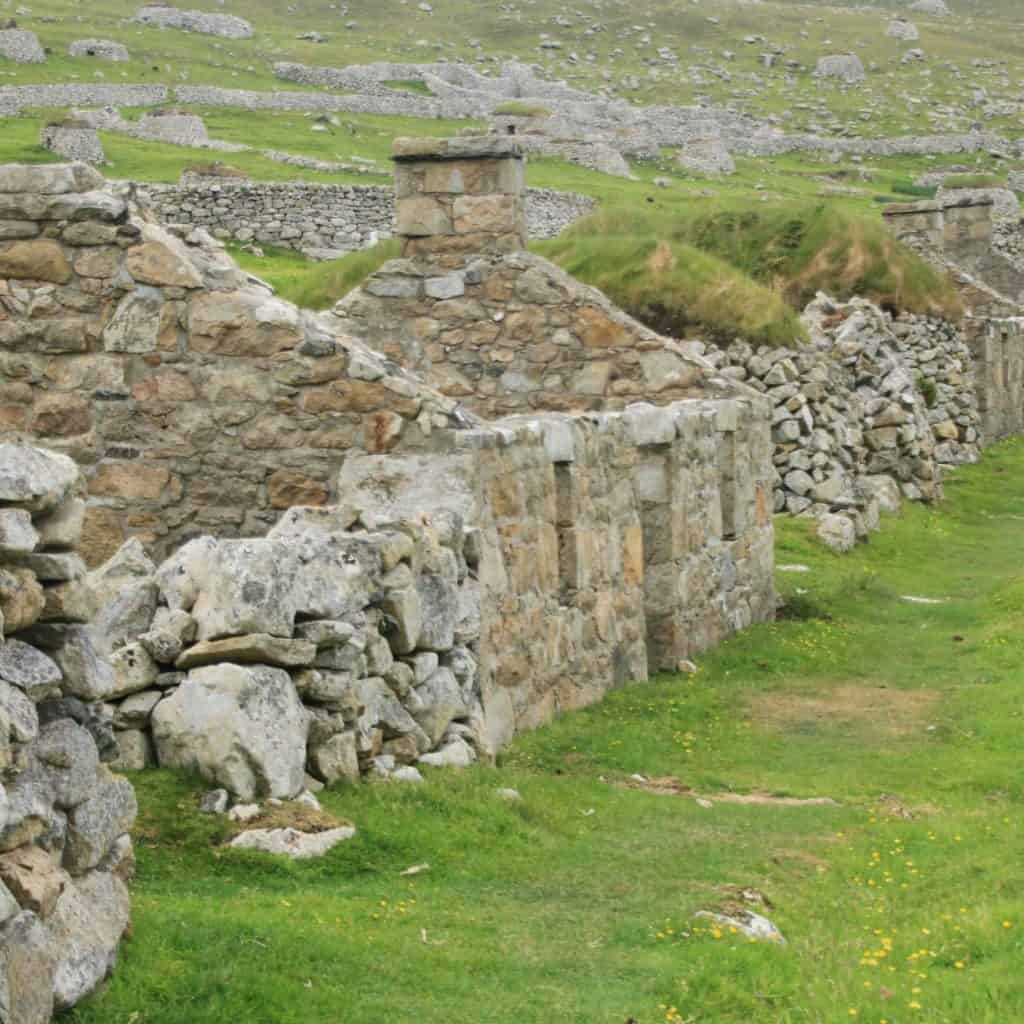
The St. Kildans lived in houses with walls made of boulders and roofs made of turf and hay. The earliest houses had no chimneys or windows and they must have been very damp, dark and dingy to live in. In the 1830’s wood and glass were introduced into new dwellings and the old houses became stables and stores.
he old feudal Celtic community of St. Kilda was gradually destroyed by the influence the Anglo Saxons from the mainland but the morning “Parliament” persisted. Every morning the men folk would meet on the Village Street and decide what had to be done that day and who would do it.
Strict Christianity had always been part of life on St Kilda and they also were responsible for the education of the children. At the start of the 20th century stone houses with sanitary facilities were introduced and an attempt was made with charity and tourism to keep the islands going; the main aim of which was to get them enough food to live on. But still the inhabitants were poverty stricken and near to starvation most of the time so that on August 29th 1930 the British government removed the last 39 inhabitants.
Also in 1957 the National Trust for Scotland became the owner and made St. Kilda a nature reserve. In 1986 St. Kilda became a UNESCO World Heritage Site.
In recent years the National Trust for Scotland has restored some of the houses, the church and the school for accommodation and education on the life of St Kilda. Tourism has been encouraged in so far as it does not conflict with preserving the flora, fauna and wild life of the St Kilda Islands.
The Hebrides derive their name from the Norse (Viking) word Havbrodoy meaning on the edge of the sea, but they were inhabited long before the Norse Era. Pliny called them Hebudes, and Ptolemy in the 2nd century wrote of the Eboudai islands above Ivernia (Ireland).
Enjoy the novelty of a being on a historic sailing ship exploring distinctive celtic communities, who only have a handful of yachts visit them each year, and have relied on small cargo shipspast and present for thier essential supplies.
Some uninhabited islands which are a haven for seabirds. Like the Great Barrier Reef, the chain of Outer Hebridean islands runs parallel to the Scottish mainland and protects it from ocean storms. The Atlantic facing coast is an almost continuous strand of sand dunes and machair (grass) whilst the east coast is deeply indented with a maze of islets and anchorages.
WINDS, WAVES & WEATHER
Loch Broom is a good flat water loch to set sails but once out in the Minches it can be rough, but you do have the bulk of Skye and the mainland to protect you from East winds and the Outer Hebrides forming a bit of a barrier from the Atlantic. Beyond the Outer Hebrides you are in the North Atlantic but you are unlikely to be sailing for St Kilda if the seas are very rough. Offshore islands can have their own micro climate and may miss the rain that the mainland mountains seem to attract. Be prepared for wild weather and then anything calm and sunny is a bonus! 4 seasons in one day.

Swimming from Tallulah in a beautiful anchorage is often a big part of the fun on our sailing activity holidays. You are welcome to bring a wetsuit.
The availability of Wild Swimming from Tallulah is at the skippers discretion. Supervision is provided from Tallulah and her dinghies. All our skippers are qualified with First Aid at Sea but not all are lifesaving guards. The boarding ladder requires quite strong arms but if you can swallow your pride we can assist you climb back on board with a little bit of help from our helicopter stop and tackle. We have a paddle board too. Scotland sea temperatures are partly warmed by the Gulf Stream, but it is not called ‘Scotland the Brave’ for nothing.

We cater for a wide range of ages and physical abilities, and how much you are expected to do varies a bit between vessels. See the vessel tab above which explains all about the ‘sailing style’ and what to expect in terms of hands on participation. There is a lot of information about day to day life, the ships facilities and accommodation on the vessel pages.

Whether you are an experienced sailor or a complete beginner, the professional crew will train you to be guest crew from the moment you arrive, with the intention that everybody works together to sail the ship. The common thread to all Classic Sailing holidays is ‘Hands on’ participation on ships that use ropes, blocks and tackles and ‘people power’ to set sail.

Every customer sailing with us will need to fill in basic medical questions on their booking application. If you are not sure if your current level of fitness and agility are up to a voyage, then please ring the Classic Sailing Office and we can chat through your concerns and possibly find options that might suit you better.
For Joining any vessel, head to the harbour where your ship will more than likely be the only sailing vessel. Address: The Pier, Ullapool IV26 2UH
As a base for starting a sailing holiday, Ullapool rewards those who take the trouble to travel this far North. On the entrance to Loch Broom are the Summer Isles and if you head out West you come to the Shiant Islands before your reach Harris and Lewis. From here, it is a relatively short hop to St Kilda, or the Flannan Isles. The sailing grounds are virtually empty and in June it feels like the sun hardly sets. At nearly N 58 degrees latitude Ullapool is further North than Moscow. Its a long way up from Edinburgh, but not as difficult to get to as you might think.
Ullapool is nestled on the shores of Loch Broom. Whatever the weather, you are immediately struck by Ullapool’s whiteness and by its regularity of design and layout. This is a legacy of the town’s origins, being designed and built in 1788 by Thomas Telford and the British Fisheries Society to exploit a boom in herring fishing at the time.
The town is also the main terminus for the car and passenger ferry to Stornoway on the Isle of Lewis. The ferry operates seven days per week so all the public transport to Ullapool is good and there are plenty of accommodation options in the town.
As a base for exploring the north west of Scotland, Ullapool is ideal. It has accommodation to suit all tastes and pockets, including one of the best (and best located) campsites in this part of Scotland. And since the upgrading of most of the roads further north it is within reasonable reach of many parts of the region that twenty-five years ago would have needed a major expedition to reach.
Ullapool offers some very nice pubs, including the Ferry Boat Inn. It also has a range of shops from the smallest right up to a well-stocked supermarket: anyone on a self catering holiday is sure to be visiting the latter at some point during their stay.
For those wanting to know more about the area the excellent Ullapool Museum & Visitor Centre on West Argyle Street can be highly recommended. This is in the old parish church, and tells the story of the people of Loch Broom and the history of Ullapool.
Getting to Ullapool
To travel from South East England to Ullapool in Scotland using a combination of public transport and planes, you can follow these steps:
1. **Train or Bus from South East England to a Major Airport**: Start your journey by taking a train or bus from South East England (e.g., London) to a major airport with flights to Inverness, the closest airport to Ullapool. Airports in London, such as Heathrow, Gatwick, or London City Airport, offer flights to Inverness. Check the flight schedules and choose the most convenient option for you.
2. **Flight to Inverness**: Book a flight from the chosen airport in South East England to Inverness. Flight durations may vary, but it generally takes around 1.5 to 2 hours to fly from London to Inverness.
3. **Travel from Inverness to Ullapool**: After arriving at Inverness airport, you can continue your journey to Ullapool using public transport options.
– **Bus**: Take a bus from Inverness airport to Inverness city center. From there, you can catch the Stagecoach service 61 bus, which operates between Inverness and Ullapool. The journey takes approximately 1.5 to 2 hours, depending on traffic and stops.
– **Taxi**: Alternatively, you can take a taxi from Inverness airport directly to Ullapool. This option is more expensive but offers convenience and a faster journey time.
It’s essential to check the flight and bus schedules in advance, as they may vary based on the day of the week and season. Plan your connections carefully to ensure a smooth journey, and consider leaving some extra time for any potential delays or unforeseen circumstances.
By selecting sustainable travel options and actively participating in carbon offset initiatives, you can make a positive impact while journeying to or from your voyage.
Here are some suggestions for carbon offset websites.
UK: One popular carbon offset website in the UK is “Clear” who offer a range of carbon offset projects and solutions for individuals, businesses, and organisations. They provide detailed information about their projects and allow users to calculate and offset their carbon footprint online.
North America: In North America, “Terrapass” is a well-known carbon offset website. Terrapass offers carbon offset projects across the United States and Canada. They provide options for individuals, businesses, and events to calculate and offset their carbon emissions. Terrapass also offers additional resources and information on sustainable living.
Europe: A popular carbon offset website in Europe is “MyClimate.” MyClimate provides carbon offset projects and solutions for individuals, businesses, and travel. They offer a carbon footprint calculator and allow users to support various sustainable projects worldwide. MyClimate focuses on promoting climate protection and sustainability.
Australia: “Greenfleet” is a prominent carbon offset website in Australia. Greenfleet focuses on planting native forests to offset carbon emissions. They offer individuals and businesses the opportunity to calculate and offset their carbon footprint by contributing to tree planting projects across Australia. Greenfleet provides detailed information about their projects and the positive environmental impacts they create.
Please note that these carbon offset websites may vary over time, so it is recommended to research and explore multiple options to find the most suitable one for your needs.
If any of these links do not work it would be kind of you to inform us, many thanks.
Please limit yourself to one soft bag or rucksack as there is limited storage space on board. No suitcases please!
Tallulah does not have waterproof jacket and trousers yet, so please bring a properly waterproof jacket and trousers on all voyages.
Walking and cycling waterproofs are usually adequate and much lighter to pack, so there really is no need to buy a coastal sailing jacket (unless you really want an excuse to invest in your future sailing). If you need any advice, or lack of a jacket is preventing you participating, please ring us on 01326 53 1234
Alcohol
Tallulah does not always have wine bottles for sale on board so you are welcome to bring modest quantities of alcohol, (unless it is an alcohol free voyage) e.g. to drink with evening meals, but drinking whilst sailing is not allowed.
A Note on Covid 19
While Tallulah's guests do not need to prove Covid Vaccination status at this time, it is expected that if a guest feels unwell prior to joining the ship they should always use common sense and test when appropriate to decide whether they should join the voyage, for their own safety and the safety of others onboard. It is a requirement that guests on residential voyages take out appropriate Travel Insurance and care should be taken to ensure insurance includes cover for such a case. Likewise, should members of Tallulah's professional crew including the skipper feel unwell prior to a voyage, they will always use common sense & test when appropriate.
If you're arriving by car, motorbike, or camper van to join Tallulah in St Mawes, here’s what you need to know.
There is a long-stay car park behind the Rising Sun pub in central St Mawes. It's run by St Just in Roseland Parish Council. You pay at the machine on arrival — card payments are accepted. Advance booking isn’t possible.
As of April 2023, the daily charge for a standard vehicle using one bay was £6, with reduced rates for longer stays (e.g. £35 for a week). Prices may have changed since then.
Motorbikes parked on yellow hatchings are free. Full mobility vehicles are also free. Blue Badge holders pay the standard rate.
Camper vans are welcome to park during the day but cannot be used for overnight stays. If your vehicle uses more than one space, you’ll need to pay for each and display a ticket for both. Coach bays are not to be used.
The car park is in regular use by both locals and visitors. High-value vehicles are often parked here, and concerns around theft or vandalism are very low, though of course no guarantee can be given.
Note
Always check the signage when you arrive, especially if staying multiple days or parking a large vehicle. Local rules may change.

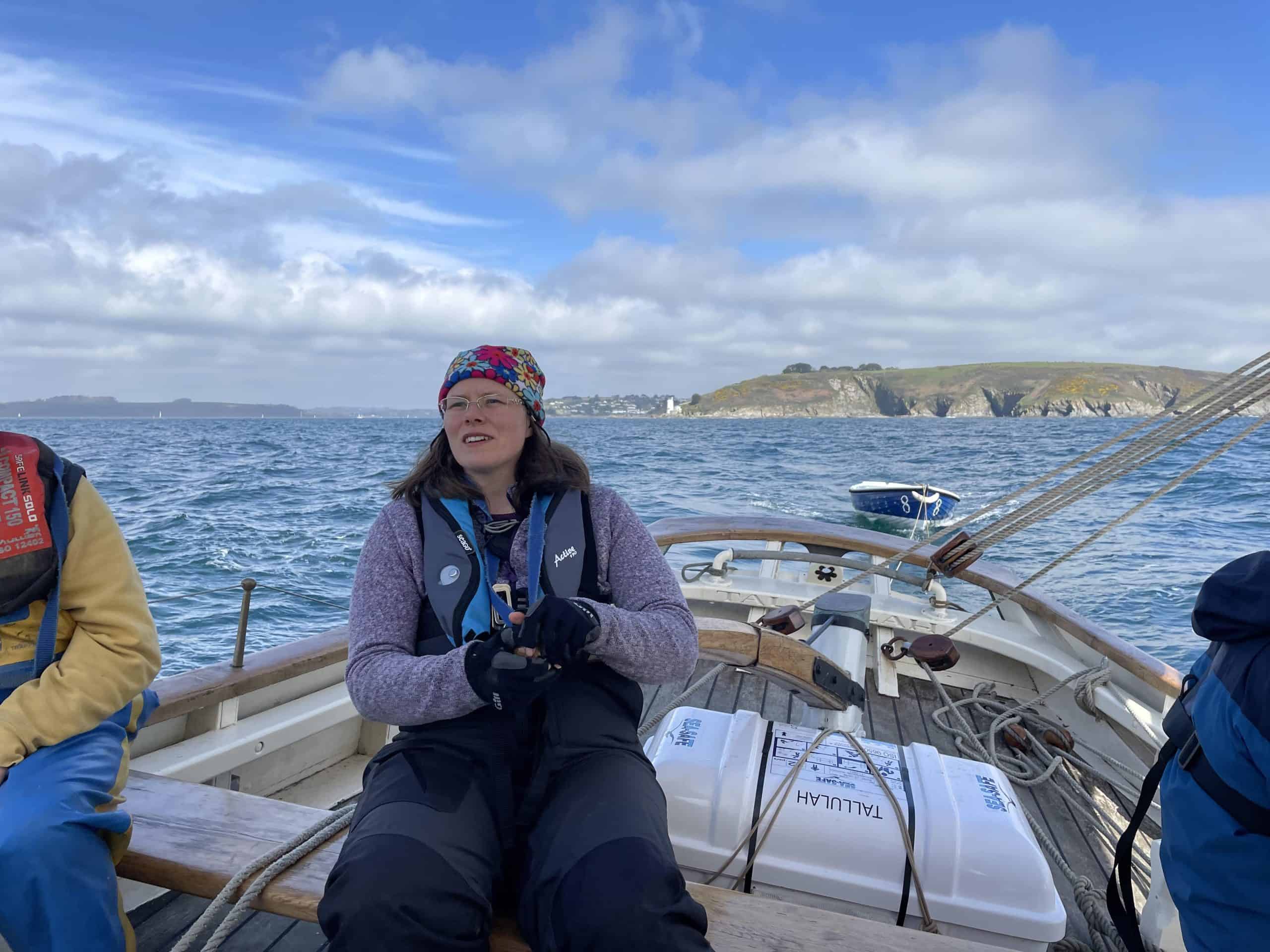
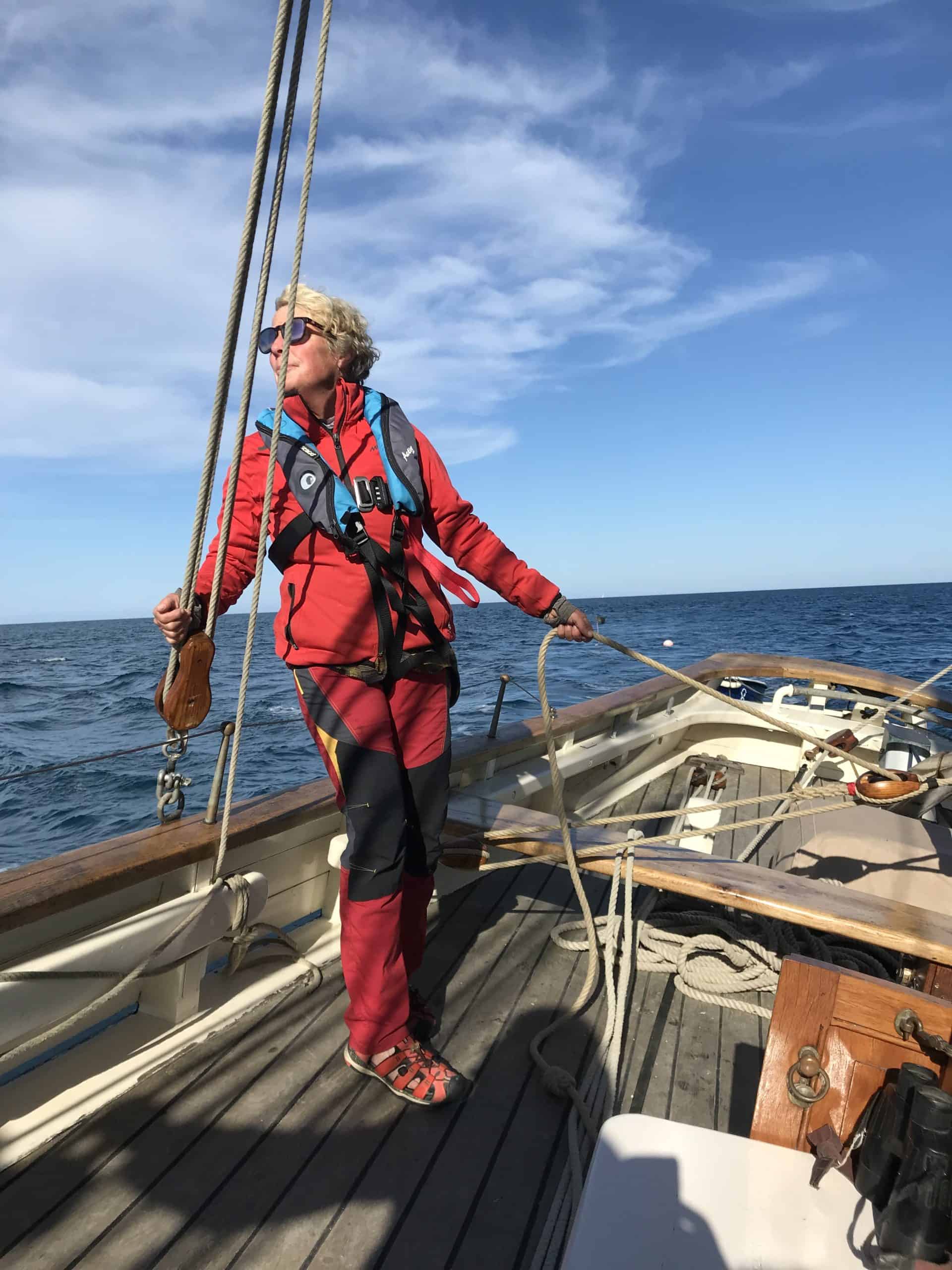
Photos and images of the striking 44ft pilot cutter Tallulah, offering charter voyages for individuals, couples and groups from 2022. Based in St Mawes, Cornwall. No experience is necessary and a local skipper as your guide.








8 nights Stornoway to Oban - heading down the Outer Hebridean chain , perhaps all the way to Mingalay
Embark
Mon 19-07-2027
Stornoway
Disembark
Mon 26-07-2027
Oban, Scotland

From
£2000
Recently Viewed Voyages
9 nights exploration voyage from Ullapool to Stornoway - explore the Outer Hebrides & aiming for St Kilda
Embark
Mon 28-06-2027
Ullapool, Scotland
Disembark
Wed 07-07-2027
Stornoway

From
£2250