
The Cape Verde (Cabo Verde) are a tropical island group are well south of the Canaries on about the same latitude as St Lucia in the Caribbean. They lie off the West African coast of Senegal and slap bang in the North East trade wind belt. A Cape Verde sailing holiday offers hot sun, a constant strong breeze (typically force 4-7) and a mix of islands – some of which are 100 miles apart and others only half a day distant, creates a world class cruising ground for those who prefer anchorages and islands to explore without hordes of tourists.
Cape Verde Sailing at a Glance
📍 Location: 300 miles off West Africa
🌡️ Temperature: 22-27°C year-round
💨 Wind: Force 4-7 trade winds
🗓️ Best Season: January-March
⛵ Ships: Morgenster, Oosterschelde
💰 Price: From €1,950
✈️ Flights: Direct to Sal from UK/Europe
⏱️ Voyage Length: 11 days typical
.
The inhabited islands include Brava, Fogo, Santiago, Maio, Sal, Boa Vista, Sao Nicholau, Sao Antao and Sao Vincente in two distinct groups – windward and leeward islands. The Cape Verde islands are out in the ocean for real blue water cruising and are just about perfect for an island hopping holiday on a ocean tall ship like Morgenster. Sal has hosted world kite surfing and Boa Vista is well known as a windsurfing blast spot. Cape Verde is a real mecca all year round for those who like it windy and sunny, with warm seas to swim in.
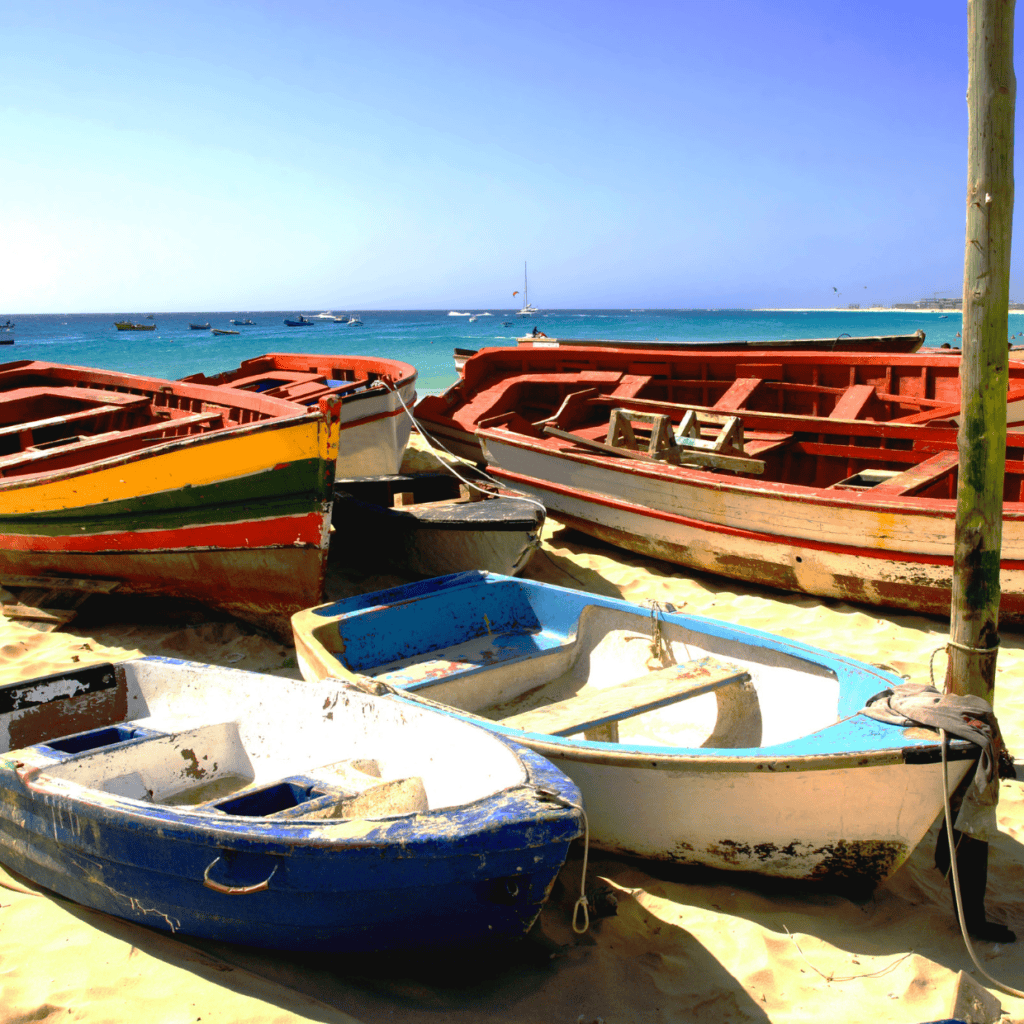
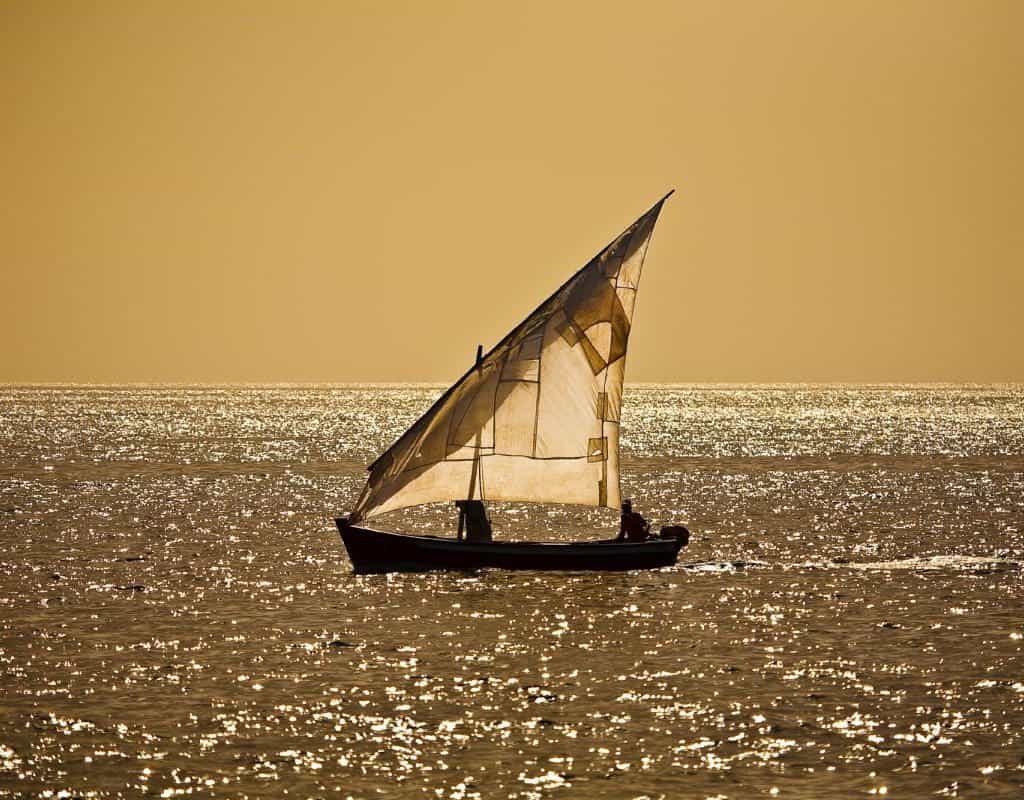
The seas are rich with fish like wahoo and tuna and the locals still sail in and out the surf in small boats with lug sails. Flying fish skip between the wave crests and you may see whales or dolphins. We saw an osprey on Sao Nicholau and spiders webs span whole streets between telegraph poles !
The islands are one of the most important breeding sites for turtles in the world with active conservation projects to protect them. Among the visitors are loggerhead, hawksbill, leatherback and green turtles.

.
Wondering how Cape Verde compares to Caribbean sailing? Here’s a helpful comparison.
Sailing Conditions
Cape Verde sits in the reliable North East trade wind belt with Force 4-7 winds, offering stronger and more exhilarating sailing. The Caribbean typically has lighter winds and calmer conditions, which some sailors prefer for a more relaxed experience.
Distance Between Islands
In Cape Verde, you’ll sail up to 100 miles between islands – this is real ocean sailing with overnight passages. The Caribbean offers shorter hops between islands, making it easier for those who prefer to see land more frequently.
Tourism and Authenticity
Cape Verde remains largely unspoilt with few tourists and authentic fishing villages. You’ll experience genuine local culture without the crowds. The Caribbean is more developed and commercial, with busier anchorages and more tourist facilities.
Flight Costs
Flights from the UK and Europe to Cape Verde (Sal) typically cost £300-400 with direct options available. Caribbean flights often exceed £600 and frequently require connections, making Cape Verde the more budget-friendly choice.
Culture and Atmosphere
Cape Verde offers a unique Afro-Portuguese heritage with haunting morna music, authentic villages, and rich history. The Caribbean has its own vibrant mixed culture, though it’s often more oriented toward tourism.
Landscape
Cape Verde presents a dramatic mix – some islands are flat and barren with endless beaches, while others feature lush volcanic valleys and mountain terraces. The Caribbean is consistently tropical and lush with palm trees and green vegetation.
Weather
Cape Verde offers dry heat with minimal rainfall (often just 2mm per month in winter) and temperatures of 22-27°C year-round. The Caribbean is more humid with occasional tropical showers.
In Control of their Destiny
There are many advantages of Cape Verde compared to the Caribbean. The one that struck me most was the locals were more welcoming. They’re a small young country scattered across miles of sea and on five main islands, but they do have a sense of their own destiny that I found lacking in the Caribbean.
Bottom Line
Choose Cape Verde if you want stronger sailing, fewer crowds, authentic cultural experiences, and lower costs. Choose the Caribbean if you prefer gentler sailing conditions, more facilities ashore, and classic tropical scenery.
Cape Verde has suffered many droughts so rain is very rare. Average monthly temperatures in January and February are around 23 degrees Centigrade (74 F) and the sea is a balmy 23 degrees C average too. In these months the rainfall average is 2mm for the month, so considerably drier than the Caribbean and almost free of mosquitos, which can often spoil a tropical paradise.
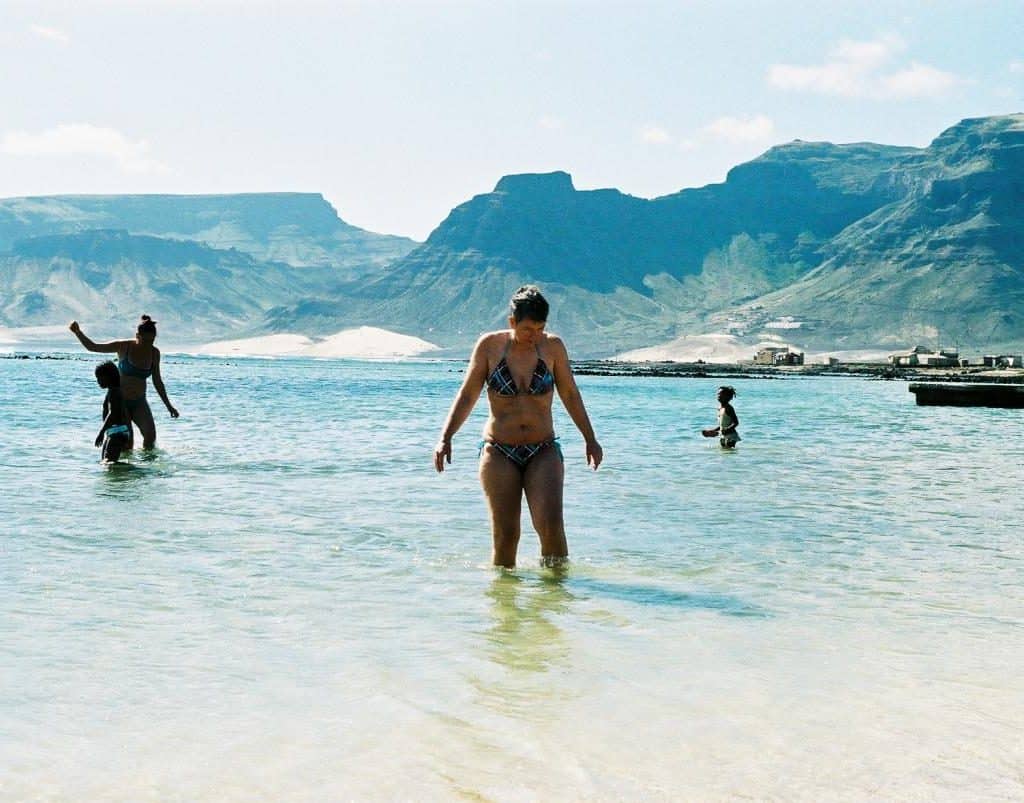
The sea is rich in wahoo, tuna and in every port you see small boats unloading daily and wheel barrow loads of fresh fish or seafood trundling down the jetties. Some islands are quite flat and barren with beaches stretching for miles like Sal and Boa Vista. Others are more typically volcanic with lush soils, moisture giving trade wind clouds over mountain peaks and craters, gorges and terraced slopes full of banana, coffee, sugar cane and all sorts of crops. The locals brew a dangerous rum grog which together with their soulful folk music are a heady combination.

Cape Verde has a dark past as Portuguese colony and holding station for the African slave trade. Miles of cobbled mountain roads were built by slaves. There is a rich culture, awareness of their past and hauntingly beautiful music and singing, telling the tales of the islands and fight against slavery. Today many Cape Verdeans work abroad and send money back to this proud but poor independant African Nation.
The islands without international airports are as yet unspoilt by tourism, but cruise ship berths are just beginning to be built on islands like Santiago, so don’t leave it too long to visit these unique islands.
Classic Sailing directors Adam and Debbie took our Christmas Holiday on Oosterschelde in Cape Verde Christmas 2011 and have been raving about Cape Verde ever since. Read about our favourite walk from crater to sea on Sao Antao, a banquet of 6 courses whilst at sea, music and dancing in Mindelo for New Year, local meals like Catchpa Stew and the hospitality of the locals.
Read Debbie’s Cape Verde Diary.
Guides to Cape Verde Sailing Holidays, a selection on World of Books website.
The best time for Cape Verde sailing holidays is January to March. During these months you’ll experience consistent NE trade winds (Force 4-7), warm temperatures (22-27°C), minimal rain (average 2mm/month), and calm seas. This is also peak turtle nesting season. While Cape Verde has excellent weather year-round, winter offers the most reliable sailing conditions and is why most voyages run during this period.
No sailing experience is required. You join as active crew, not a passenger, but the professional crew will teach you everything you need to know. Cape Verde voyages suit both complete beginners and experienced sailors. The strong trade winds and longer passages (up to 100 miles between islands) make this real blue water sailing, but ships like Morgenster and Oosterschelde are stable, comfortable ocean-going vessels perfect for learning. You should be reasonably fit and able to climb in and out of the tender.
Cape Verde offers stronger, more consistent winds (better sailing), fewer tourists (more authentic experiences), and cheaper flights from Europe (often £300-400 vs £600+ to Caribbean). The sailing is more adventurous with 100-mile passages between islands versus the Caribbean’s shorter hops. Culturally, you’ll experience unique Afro-Portuguese heritage with morna music and local traditions. Cape Verde is drier and less commercial than the Caribbean, with unspoilt islands and genuinely remote anchorages. The trade-off? Less lush vegetation on some islands and fewer facilities ashore.
Most 11-day Cape Verde voyages visit 5-6 different islands. Common stops include: São Vicente (Mindelo) – the cultural capital with vibrant music scene; Santo Antão – dramatic mountains and lush valleys; São Nicolau – remote and unspoilt; Sal – flat with miles of beaches, main joining point; Boa Vista – windsurfing and turtle beaches; and sometimes Fogo, Santiago, Brava or Maio. The itinerary depends on wind and weather, as you’re on a real sailing ship, not following a rigid cruise schedule.
Cape Verde sailing holidays start from €1950 for an 11-day voyage, in the 2025-2026 season. This includes all meals, accommodation aboard, and participation in sailing the ship. NOT included: flights to/from Sal (typically £300-400 from UK), optional island excursions (jeep safaris, guided walks – usually €20-50 each), drinks at the bar, and travel insurance. Youth discounts (20% off for 18-25s) and family discounts are available on select voyages.
.
Winter Sunshine in the Cape Verde 2026 OS180226
Embark
Wed 18-02-2026
Palmeira, Sal, Cape Verde
Disembark
Sun 01-03-2026
Palmeira, Sal, Cape Verde
From
€1,925.00
Winter Sunshine in the Cape Verde 2026 OS050226
Embark
Thu 05-02-2026
Palmeira, Sal, Cape Verde
Disembark
Mon 16-02-2026
Palmeira, Sal, Cape Verde
From
€1,925.00
Winter Sunshine in the Cape Verde 2026 OS240126
Embark
Sat 24-01-2026
Palmeira, Sal, Cape Verde
Disembark
Wed 04-02-2026
Palmeira, Sal, Cape Verde
From
€1,925.00