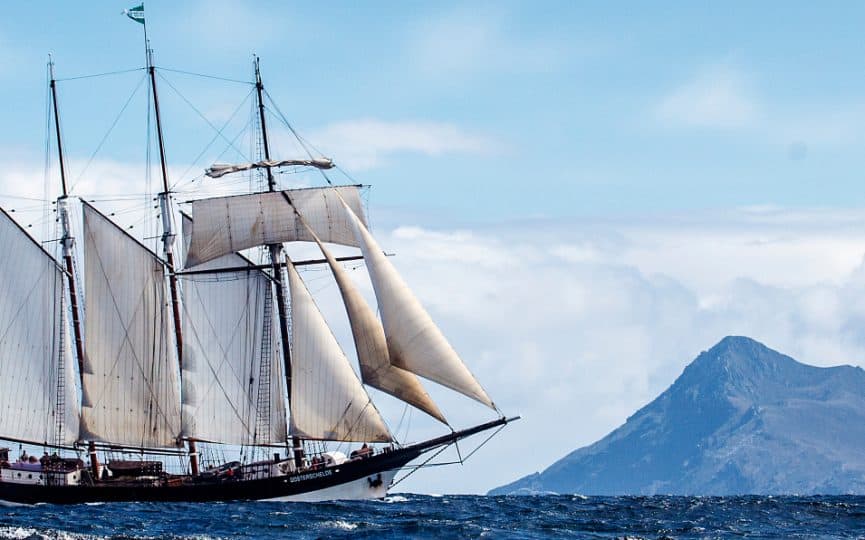
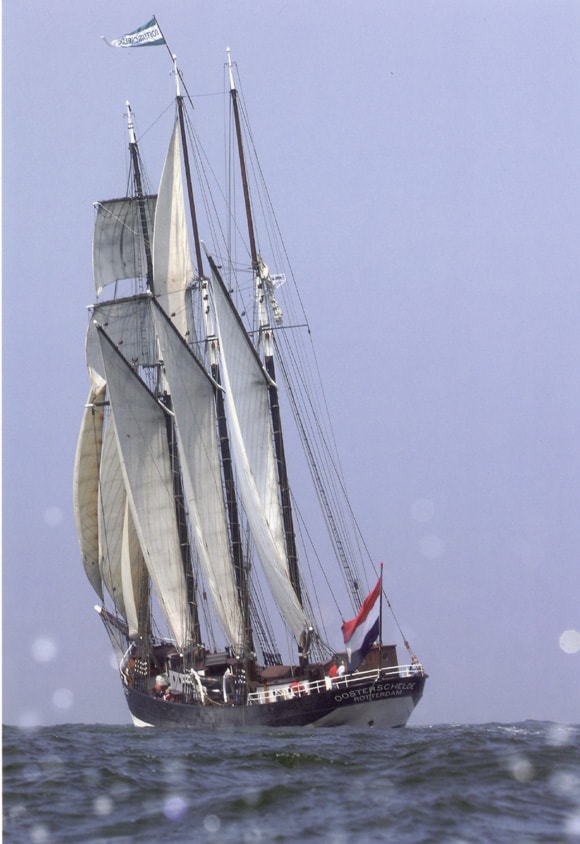
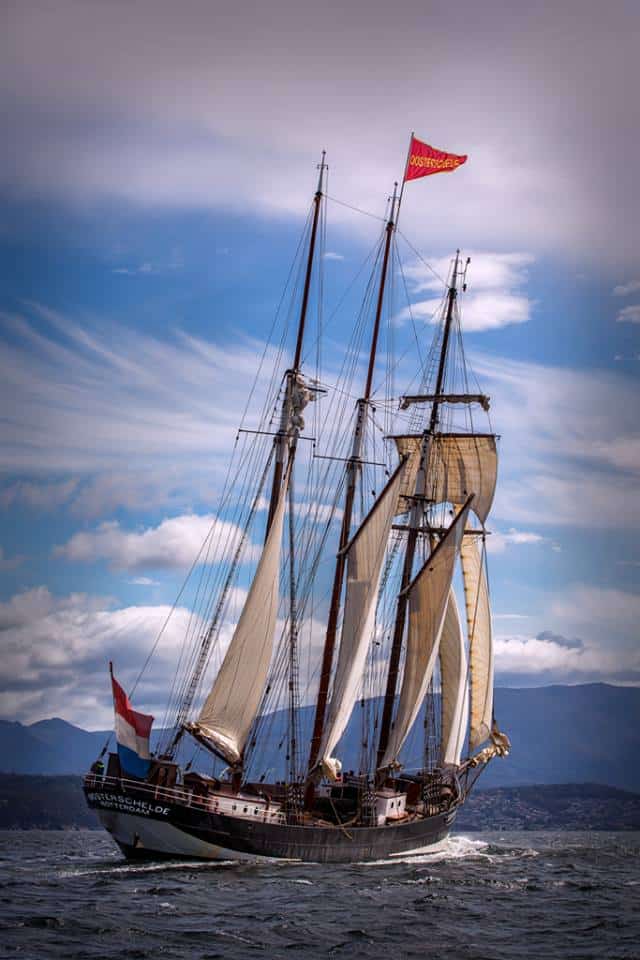
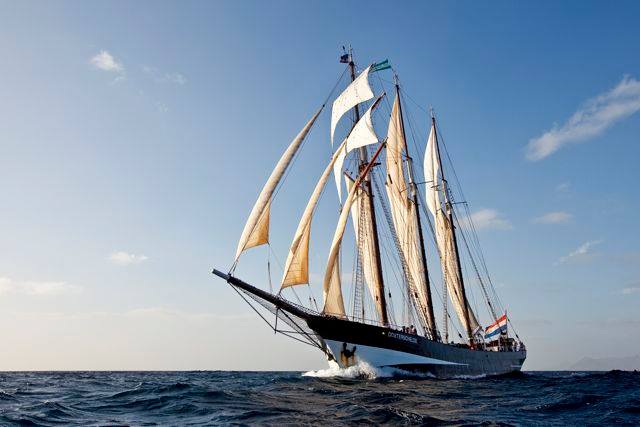
Sail aboard Oosterschelde from Portsmouth, USA to Lunenburg, Nova Scotia!
Book Now
Embark
Disembark
Vessel
Duration
Voyage No
Mon 27-07-2026, 17:00Portsmouth, New Hampshire USA
Sat 01-08-2026, 09:00Lunenburg, Nova Scotia, Canada
Oosterschelde
5 Nights
OS270726
BE QUICK! We expect this voyage to fill up quickly!
This Atlantic passage sails from Portsmouth, New Hampshire to Lunenburg, Nova Scotia aboard the tall ship Oosterschelde. It is a proper sea passage with several days offshore, watch keeping, sail handling, and life settling into a steady ocean rhythm. The voyage finishes in one of Canada’s most distinctive historic ports.
Voyage
Vessel
VOYAGE HIGHLIGHTS
An offshore Atlantic passage between the USA and Canada aboard a traditional square rigged ship.
Hands on sailing with watches, sail handling, helming, and navigation under professional guidance.
High chance of seabird sightings and regular encounters with dolphins in open water.
Arrival into Nova Scotia’s rugged coastline and the historic fishing town of Lunenburg, a UNESCO World Heritage site.
This voyage offers a classic North Atlantic crossing on a working tall ship. Sailing from New England to Nova Scotia, it combines time at sea with a memorable landfall on Canada’s historic Atlantic coast. Life aboard Oosterschelde follows the traditional watch system, with guests fully involved as part of the sailing crew.
Setting Sail from Portsmouth, New Hampshire
You join Oosterschelde in the historic port city of Portsmouth, New Hampshire. The ship is in port for Sail Portsmouth, a small harbour festival that reflects the city’s strong maritime heritage. Arriving a day early gives time to explore the waterfront, historic streets, and local museums before joining the ship.
Once aboard, the crew will show you to your cabin and introduce you to life on board. While supper is prepared, there is time to meet fellow sailors and settle in. The following morning, a pilot comes aboard and the ship sails down the Piscataqua River before entering the Atlantic Ocean.
Along the Way
After leaving the coast, sails are set and the ship settles onto her ocean course towards Canada. The first part of the voyage is spent fully at sea, with little commercial traffic and a strong sense of open water sailing.
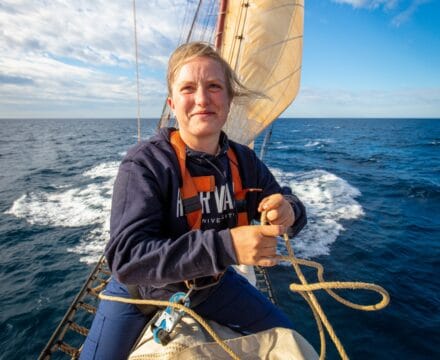
Days follow a steady rhythm of watches, meals, sail handling, navigation, and lookout duties. Sailing guests take part in all aspects of running the ship, from trimming sails to helming and keeping watch, guided by the professional crew.
Wildlife sightings are a regular feature on this route. Seabirds are commonly seen following the ship, and dolphins are often encountered during the crossing. Time on deck, shared meals, and long conversations become part of daily life as the miles pass beneath the keel.
As Nova Scotia approaches, the coastline becomes greener and more rugged. The ship sails past Cross Island and into Mahone Bay, offering a striking contrast to the open ocean days before.
What others have said…
Great adventure very much hands on and an experience not to be forgotten as a complete novice and landlubber I have to say ill always remember it fondly and particularly the excellent food. – Steve
Arriving in Lunenburg, Nova Scotia
Oosterschelde arrives in Lunenburg, Nova Scotia’s largest historic fishing town. The evening is usually spent on deck, marking the end of the passage and the shared experience at sea.
Disembarkation takes place the following morning. Staying an extra day or two is strongly recommended. Lunenburg’s old town is a UNESCO World Heritage site, known for its colourful wooden buildings and strong maritime identity. The town is also home to the famous Grand Banks schooner Bluenose II, a key part of Canadian sailing history.
Life Aboard Oosterschelde
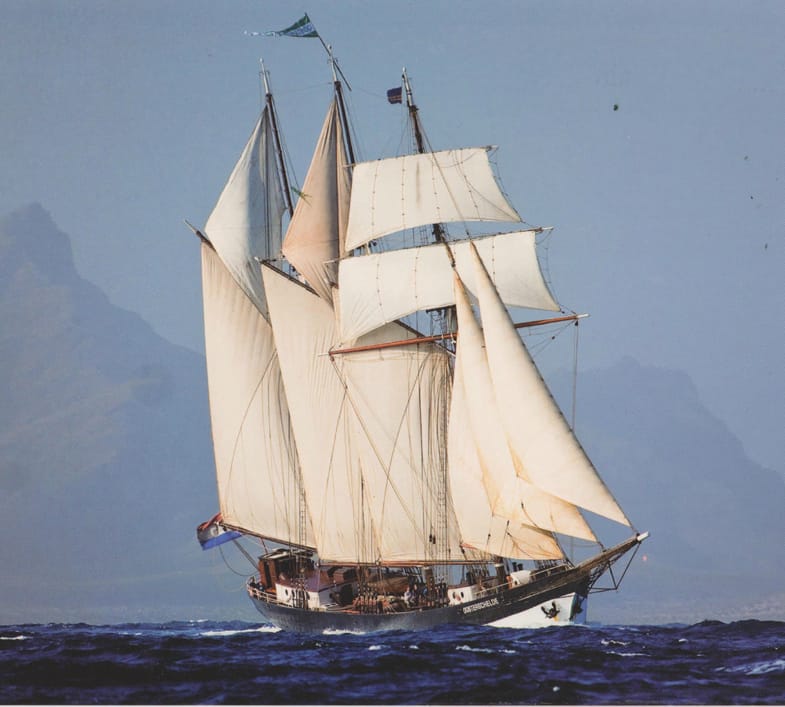
Oosterschelde, built in 1918, brings over a century of sea-going experience to this passage. Originally constructed as a cargo schooner, her steel hull has proven itself across Atlantic crossings, Arctic voyages, and ocean passages worldwide. At 50 meters (164 feet) length, she’s substantial enough to handle ocean conditions comfortably while maintaining traditional working vessel character.
Accommodation is in shared cabins with proper berths—real beds with mattresses, not hammocks. Cabins typically sleep 2-4 people, with same-gender arrangements in conventional sleeping areas. All cabins have ventilation, reading lights, and storage for personal gear. Bathroom facilities are shared, with proper marine toilets, sinks, and hot water showers.
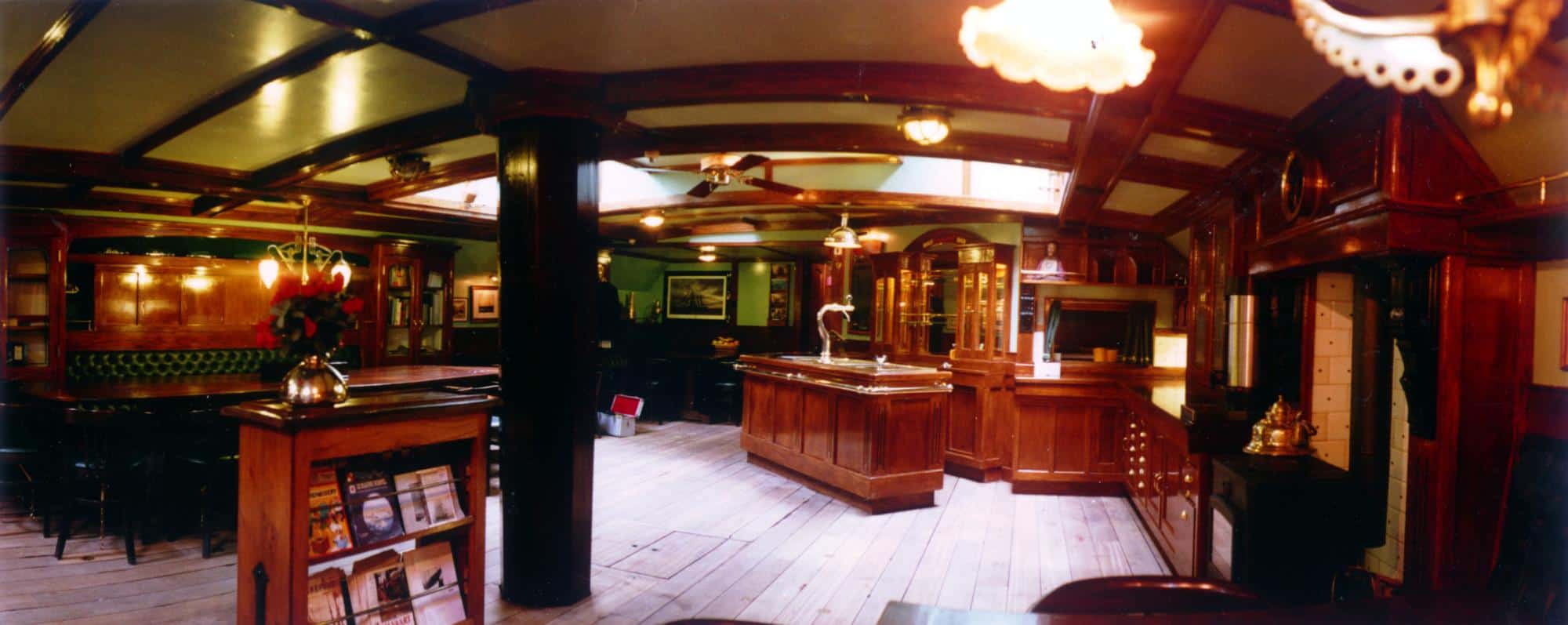
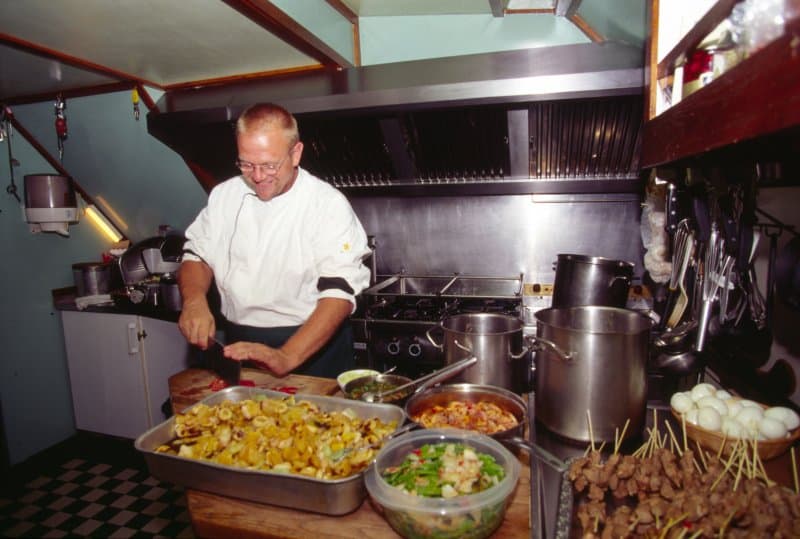
Meals are prepared fresh daily by the ship’s cook. Expect tasty, well-prepared food providing the energy needed for active sailing. Breakfast includes hot coffee, fresh bread, eggs, and fruit. Lunch is often simpler, allowing the cook to prepare properly for dinner—roasted meats, fish, vegetables, varied international cuisine. Dietary requirements can be accommodated with advance notice. Shared meals in the beautiful saloon create community, with everyone gathered around tables discussing the day’s sailing.
Piano
An unusual feature for a tall ship is the upright piano in the saloon, I have spent wonderful evening’s at the end of voyage singing along to sea shanties and other songs accompanied by the piano.
The saloon serves as the social center when weather drives people below, with long tables, bench seating, bookshelves of maritime literature, and portholes providing natural light. The vessel maintains a well-stocked bar with reasonable prices—purchases are recorded and settled at voyage end. On deck, protected areas allow comfortable sitting even during inclement weather, though most prefer being on deck whenever conditions allow.
Solo travelers are common on these voyages—approximately 75% of Classic Sailing guests travel independently. The small crew size, typically 24-30 guests plus professional crew, creates naturally social atmosphere. Friendships develop quickly during shared watches and meals.
The Professional Crew
Captain Maarten Dijkstra and his professional crew bring decades of combined experience sailing Oosterschelde across oceans. The crew typically numbers 6-8 people: first mate managing deck operations, engineer maintaining systems, cook preparing meals, and able seamen handling watches and guest instruction. They’re skilled teachers who understand that guest crew ranges from complete beginners to experienced sailors.
You’re encouraged to participate as much or as little as you choose, though most find themselves increasingly involved as confidence builds. The physical demands are moderate—you don’t need exceptional fitness, but should be comfortable moving around a vessel that heels and pitches. Tasks are matched to various capability levels.
Wind, Waves & Weather
This is an offshore Atlantic voyage, and conditions reflect that. Expect a mix of wind strengths and sea states typical of the North Atlantic in summer. Days at sea can include anything from steady following winds to livelier periods that require reefing sails and adapting plans.
Weather systems are monitored carefully, and the route is adjusted as needed to suit conditions. While the ship is well found and professionally crewed, this voyage is best suited to those comfortable with sustained time at sea and the physical movement of an ocean going vessel.
Practical Information
Experience Requirements
No previous sailing experience is required, as the professional crew will teach you everything from basic rope handling to navigation skills at a pace that suits you. However, it might be sensible to know you enjoy being at sea before setting off on this long voyage. If you’ve never sailed overnight before, consider a shorter voyage first to confirm you’re comfortable with the motion and lifestyle.
You should be reasonably fit and able to move around a vessel that heels and pitches in ocean conditions. Most tasks don’t require great strength—technique and teamwork matter more than individual power.
What’s Included
The voyage price includes all meals and accommodation aboard, safety equipment, instruction and guidance from the professional crew, and participation in sailing the vessel. Not included: flights, accommodation before joining or after leaving the vessel, travel insurance (required and must cover maritime activities), personal bar bills, and shore excursions.
Solo Traveler Information
Solo travelers are very welcome. Shared cabins offer both economy and security, with same-gender arrangements. The small crew size and watch system naturally create social connections—you’ll get to know fellow crew members during shared watches, meals, and deck work. Many previous guests specifically mention the friendships formed during passages as voyage highlights.
Booking Considerations
This voyage will be popular due to the rarity of non-US Tall Ships visiting mainland US. If you’re interested, enquire early about availability. Classic Sailing has connected guests with traditional sailing experiences for almost 30 years and can answer questions about what to expect, what to pack, and how to prepare.
Physical Considerations
Ocean voyages involve sustained motion as the vessel responds to swells. Some people experience seasickness initially, though most adapt within 24-48 hours. Medication is available, and the crew have extensive experience helping guests adjust. Once adapted, many find the constant motion soothing. You can find out more about seasickness and how to deal with it in our “Will I Get Seasick?” article
The watch system means interrupted sleep patterns, but most people adapt within a couple of days, learning to sleep when opportunity permits. The physical activity and fresh air mean you’re genuinely tired when off-watch.
The itinerary is subject to weather conditions and the captain’s discretion. However, the advertised departure from Portsmouth, USA and arrival in Lunenburg, Nova Scotia remain firm commitments.
“Just sailed on the Oosterschelde across the North Sea to the Netherlands! Great taste of sailing would recommend to anyone who is thinking of dipping their toe in. Loved every second of it, hauling ropes out in the elements, rolling around in the middle of the open sea on the deck of an authentic lovely Dutch schooner brilliant! A life changing experience of the open sea.” – Rex, UK
Frequently Asked Questions
Do I need sailing experience to join this transatlantic passage?
No previous sailing experience is required, as the professional crew will teach you everything from basic rope handling to navigation skills at a pace that suits you.
What is included in the voyage price?
The voyage includes all meals prepared fresh daily, accommodation in shared cabins with proper berths, all safety equipment and foul weather gear, comprehensive instruction from the professional crew, and full participation in sailing the vessel. You’re welcome to stand watches, help with sail handling, take the helm, learn navigation, and engage with all aspects of operating a traditional tall ship. Not included are flights, accommodation before joining or after leaving the vessel, travel insurance (required and must cover maritime activities), personal bar bills, and shore excursions. Classic Sailing can provide detailed breakdown when you enquire about specific departures.
How many passengers sail aboard Oosterschelde and what is the crew structure?
Oosterschelde typically carries 24 guests up to plus 6 professional crew members. This relatively small number means everyone participates actively in sailing operations and the social atmosphere remains intimate. The professional crew includes the captain, first mate, engineer, cook, and able seamen. The guest-to-crew ratio ensures individual attention for learning, with instruction adapted to your experience level. During watches, you’ll work directly with crew members who can answer questions and demonstrate techniques.
What should I pack?
We suggest layered clothing adaptable to changing conditions. Essential items include moisture-wicking base layers, warm mid-layers like fleece, waterproof outer layers for rain and spray, sun protection including hat and high-SPF sunscreen, sunglasses with retaining strap, soft-soled deck shoes with good grip, and a red light headlamp for night watches. Include any prescription medications with extras, seasickness medication if concerned, basic toiletries in soft bags, camera equipment with waterproof protection, and a water bottle. Classic Sailing provides comprehensive packing lists upon booking. Don’t overpack—storage in cabins is limited. The vessel provides foul weather gear, safety harnesses, and life jackets.
For daily tall ship news and voyage updates, follow Classic Sailing on Facebook — over 64,000 sailors already do. facebook.com/Classic.Sailing
Start & End Port
Portsmouth, New Hampshire USA
Portsmouth, New Hampshire, USA
You are likely to spend some time in the ports where your voyage begins or ends. These are not just points of arrival and departure. They are places worth exploring in their own right. Allowing an extra day ashore often adds depth to the whole sailing experience, as well as acting as a time buffer, should your travel plans or voyage encounter a slight delay.
Portsmouth sits at the mouth of the Piscataqua River, one of the fastest flowing navigable rivers in North America. It is one of the oldest continuously inhabited ports in the United States, with a working harbour that has supported fishing, trade, and naval shipbuilding for more than three centuries. The town remains compact and walkable, with historic streets running directly down to the water, making it an easy and rewarding place to explore before or after a voyage.
Keeping in Touch
The exact berth of your vessel may not be confirmed until closer to your joining date. You will be informed by email once the location is finalised. It is sensible to keep the ship’s mobile or cell phone number with you in case of travel delays or last minute changes.
What to Do in Portsmouth
Historic Waterfront and Market Square
Portsmouth’s historic centre revolves around Market Square and the surrounding waterfront streets. Brick warehouses, former chandlers and merchants’ houses now contain bookshops, galleries, cafés and small independent shops. The area is lively without being overwhelming, and everything is within easy walking distance.
Strawbery Banke Museum
Just south of the waterfront lies Strawbery Banke, an open air museum preserving Portsmouth’s earliest neighbourhood. Restored houses and gardens trace everyday life from the 1600s through to the 20th century. It is one of the most informative ways to understand the town’s maritime and social history. The museum is seasonal, so opening dates should be checked in advance.
Piscataqua River and Harbour Walks
Walking along the river reveals how closely Portsmouth is tied to the water. The Harbour Trail links key historic sites and viewpoints along the Piscataqua, offering insight into shipbuilding, trade and naval activity. Even a short stroll along the waterfront gives a clear sense of the strong tidal flow and working nature of the river.
Prescott Park and the Riverfront
Prescott Park sits directly on the river’s edge and provides a quiet green space with views across to Maine. In warmer months it hosts outdoor performances through the Prescott Park Arts Festival. At any time of year it is a good place to pause and watch traffic moving through the harbour.
Naval and Maritime History
Portsmouth’s naval heritage remains visible. Albacore Park, home to the preserved USS Albacore submarine, is open to visitors and offers a self guided tour that gives a clear picture of Cold War era naval technology. Closer to the centre, memorials and historic churches reflect the town’s long relationship with the sea and the navy.
Food, Drink and Everyday Portsmouth
Seafood features strongly, as expected, but Portsmouth also has a broad mix of small restaurants, bakeries and cafés. New Hampshire has no general sales tax, which makes browsing local shops and galleries slightly easier on the wallet. The town feels lived in rather than staged, which suits sailors looking for somewhere straightforward and characterful.
What Makes Portsmouth Stand Out
Portsmouth combines the feel of a historic seaport with the ease of a small, walkable town. It remains a working harbour, shaped by strong tides and long maritime traditions. For sailors, it offers context rather than spectacle, a place where the relationship between town and sea is still visible and relevant.
You are likely to spend time in the ports where your voyage begins or ends. These places are more than transit points. They offer context, history, and a chance to settle into the rhythm of the coast before or after sailing.
Lunenburg sits on the Atlantic coast of Nova Scotia, south west of Halifax, and remains one of the best preserved examples of a planned British colonial settlement in North America. Founded in 1753, the town developed around fishing, shipbuilding, and transatlantic trade. Today it is a working harbour with deep maritime roots, recognised as a UNESCO World Heritage Site for the survival of its original street layout, waterfront buildings, and strong seafaring culture.
Keeping in Touch
The exact berth of your vessel may not be confirmed until closer to your joining date. You will be informed by email once the location is finalised. Please keep the ship’s mobile or cell phone number with you in case of delays or changes to your travel plans.
What to Do in Lunenburg
Old Town and Waterfront
Lunenburg’s waterfront is compact and immediately engaging. Colourful wooden buildings line the harbour, many of them former fish processing sheds and chandlers now used by boatyards, galleries, cafés, and maritime businesses. The town is small enough to explore on foot, with steep streets leading up from the harbour to viewpoints over Lunenburg Bay.
Bluenose Heritage
Lunenburg was the home port of the original Bluenose, the famous Canadian racing and fishing schooner. The Bluenose II, her modern replica, frequently visits or sails from the town, and her story is central to local identity. Even when she is not present, the legacy of schooner sailing and competitive seamanship runs through the town.
Walking the Town and Harbour Views
A walk through Old Town reveals the original grid street plan laid out in the 18th century. Churches, merchants’ houses, and former sail lofts tell the story of a prosperous maritime community shaped by the Atlantic. The hills above the harbour provide wide views across the bay and out to sea, giving a sense of how exposed and important this coastline has always been.
Boatbuilding and Working Waterfront
Lunenburg remains a place where wooden boatbuilding and repair are visible and active. Local yards and workshops continue traditional skills alongside modern practice. This is not a waterfront preserved purely for visitors; it is still a place where boats are worked on, maintained, and prepared for sea.
Food and Everyday Life
Seafood is a natural focus, with lobster, scallops, and fish forming the backbone of local menus. Alongside this are small bakeries, casual cafés, and a handful of restaurants that reflect the town’s year round community rather than a purely seasonal resort atmosphere.
What Makes Lunenburg Stand Out
Lunenburg is not a reconstruction or a museum town. It is a living port where history remains visible in daily life, from the working waterfront to the wooden houses and steep streets shaped by wind and weather. For sailors, it offers a rare combination of authenticity, continuity, and direct connection to Atlantic maritime tradition.
What to pack for a sailing holiday on Oosterschelde
Included
Sailing Instruction
Safety Equipment (life jackets and harnesses)
All meals to including refreshments throughout the day
Duvet, pillow and sheets
Hand towels
What is not Included
Waterproof jackets and trousers
Alcoholic drinks but there is a bar on board
What to Bring
Suitcases take up a lot of room in a cabin, so it is better to uses soft bags in a ship. A small rucksack for going ashore is useful.
Oosterschelde does not supply waterproof jackets and salopette type trousers. Please bring your own waterproof clothing.
A mix of warm and wind proof clothing.
Lots of thin layers is better than one thick layer in cold destinations.
In tropical countries - long sleeves and long trousers to protect you from the sun
Footwear on board needs a good grip and soft soles- the decks are wood or steel.
Ashore stout, waterproof walking boots are best if you are in remote places.
Oosterschelde has European 2 pin sockets 240 V
Cameras, chargers and video recorders
Binoculars are handy for bird watching etc.
Suntan lotion, hats, sunglasses
Dont forget any regular medication, persciption glasses and spare
Euros for bar bill
Passport, travel insurance, tickets etc
To get ashore is usually by dinghy so be prepared to get wet feet. Rubber boots or quick drying sandals - depending on the location.
Review
Hobart to Christchurch New Zealand
Oosterschelde OS121224 Voyage Feedback
Hi Adam
On the plus, the crew including Captain and cook were excellent. I saw orca whales, dolphins and various birds. Grant, the ornithologist researcher gave a couple of talks which I thoroughly enjoyed. There was a Christmas meal onboard (see photo below) which was nice. There was a mix of weather from strong winds and rain to days when the wind was absent so the ship had to motor.
As a relative novice sailor compared to the more experienced sailors, I found one or two days when the night watches coincided with these rough conditions challenging to maintain a footing.
I found the break when the ship docked for 2 days at Bluff a welcome relief from sailing and a chance to explore ashore at Invercargill.
I am glad I went on the voyage as I knew it would be a challenge. This would suit the more experienced sailor. However I would still give it 5 out of 5 even though I was not completely suited to it.
Frank
Great trip on a wonderful ship. Crew were very friendly, helpful and professional. The passengers were also very friendly and a real mix of interesting people. I had a great first time on a big sailing ship.
At the Helm
Steve H - July 2023
Cape Verde & Caribbean Crew
Together with my husband Bert we were on the trip around the Cape Verde on the Oosterschelde and had a great time. The crew was fantastic and very friendly. They showed us what has to be done to sail a beautiful ship like this. Made some new friends among the passengers and it was a trip I will not forget for a long while. And who knows when we will meet again. Thanks" Jenny H E. from NL
I've just completed my fourth voyage in four years and it was like a big family holiday! Familiar faces welcomed us aboard, we met up with guests and friends from previous voyages and the islands that we visited in the French West Indies were beautiful. The best part of the voyage was our last sailing day when the "lunatics took over the asylum". Maarten let the guest crew sail the Oosterschelde from St Lucia to Martinique (while keeping an eye on us to make sure that neither we or the ship were in danger) It was hard work but safe to say that I learned a lot more on that day, having to think about what I was doing, rather than just being told what to do. We are just about to book our next voyage" Richard D. British Columbia
What was the best bit? Variety of sailing and the islands visited.
What was the worst bit? One rough passage.
Why do you sail? We enjoy the technicalities of sailing a large vessel and the passage planning involved. We generally enjoy off-shore sailing.
Any other comments The skipper and crew were very friendly, helpful and informative. Accommodation and food was very good.- Phillip B - Cape Verde
Ocean Passages
Credit to Robbin Conner - Oosterschelde Ocean Crossing from Cape Verde to Rotterdam
Canada Tall Ships Race Participants
So happy to have sailed from Miramichi to Quebec! So good to be on this beautiful grand old lady with only nice and funny people. Miss you all! And for this moment especially Richards' breakfast. Thank you so much Jenny Edward Richard Jan-Willem Jurriaan and Maarten, and all the other guests for this wonderful and amazing time. Love and hugs xxx Ernst and Ellen V.
The dream come true! What a georgous trip I had between Québec and Halifax! A part of me will be onboard forever... Il will be back to you, most beautiful ship of the world! I will be back, Oosterschelde! What a crew! What a captain! Marteen, I could write a novel with you as the major character! You are an amazing guy, a good, a great man! Your team is fantastic! I am now back ashore but... "I must go down to sea again... "
" C'est pas l'homme qui prend la mer
C'est la mer qui prend l'homme "
Pierre-Luc. Canada
Now is the hour that I must say goodbye, soon you'll be sailing far across the sea. We'll meet again, don't know where, don't know when. Maybe in the south pacific or around Cape Horn. Captain Arian, I would sail anywhere in the world with you, your crew and Oosterschelde. Warren C. New Zealand
The Word from European Voyages
Just sailed on the Oosterschelde across the North Sea to the Netherlands! Great taste of sailing would recommend to anyone who is thinking of dipping their toe in. Loved every second of it, hauling ropes out in the elements (mainly with the Sun on my back) rolling around in the middle of the North Sea on the deck of an authentic lovely Dutch schooner brilliant! A life changing experience of the open sea, next stop RYA competent crew! Many thanks to Adam and Classic Sailing for all the arrangements at such short notice and thanks too to all the crew for looking after me and feeding me so well. Be warned though life ashore afterwards can seem very hum-drum." Rex aka Steve W
I want to thank the crew for the three magnificent days passed on board, between "Golfe du Morbihan" and "Le Havre". I sailed on numerous occasions on about ten different ships, and this sailing on Oosterschelde is the best experience I ever had. I was impressed by the good performances of the ship, and by the way the crew adjusts sails permanently so that the ship always gives the best ; it was an immense pleasure to participate of my best in all these operations. I regret that our different languages did not allow us to communicate more, because all the crew members were really very nice and very thoughtful with us. I have now only an envy: to embark again on Oosterschelde, to be on the deck to participate in the laborers of sails, to climb on the mast to help the crew, and to share again these excellent moments given by sailing on Oosterschelde !!! " Excuse my bad English, Gilbert P. Vernon, France
Vessel Gallery
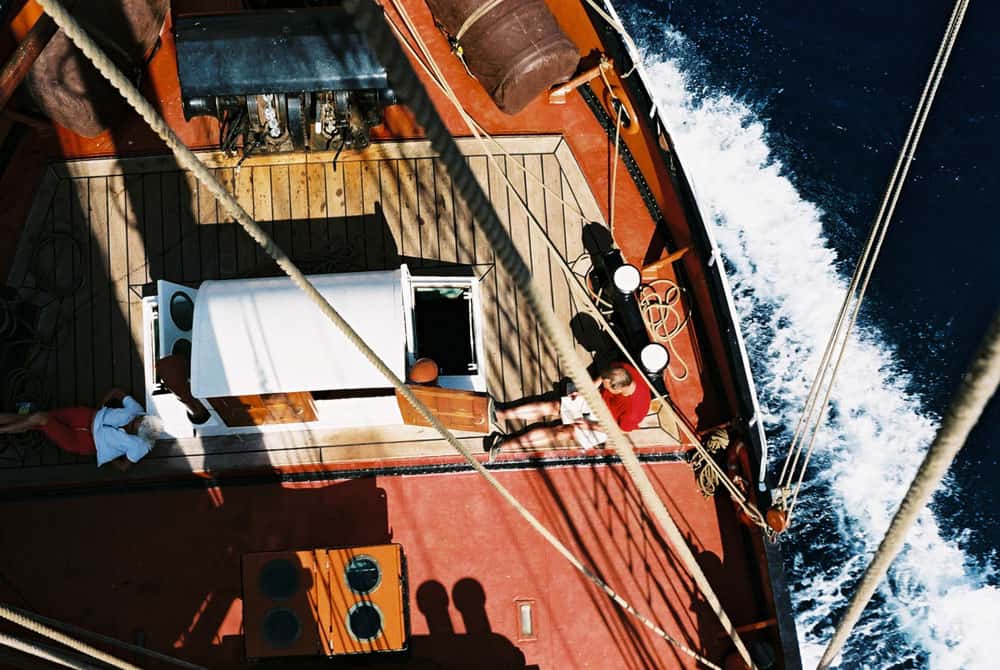
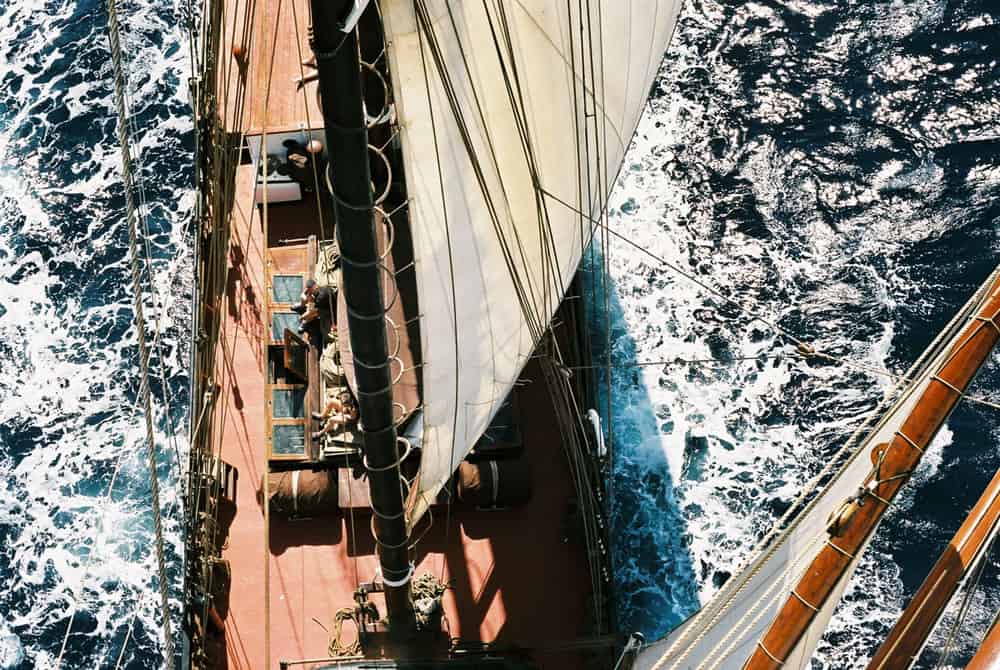
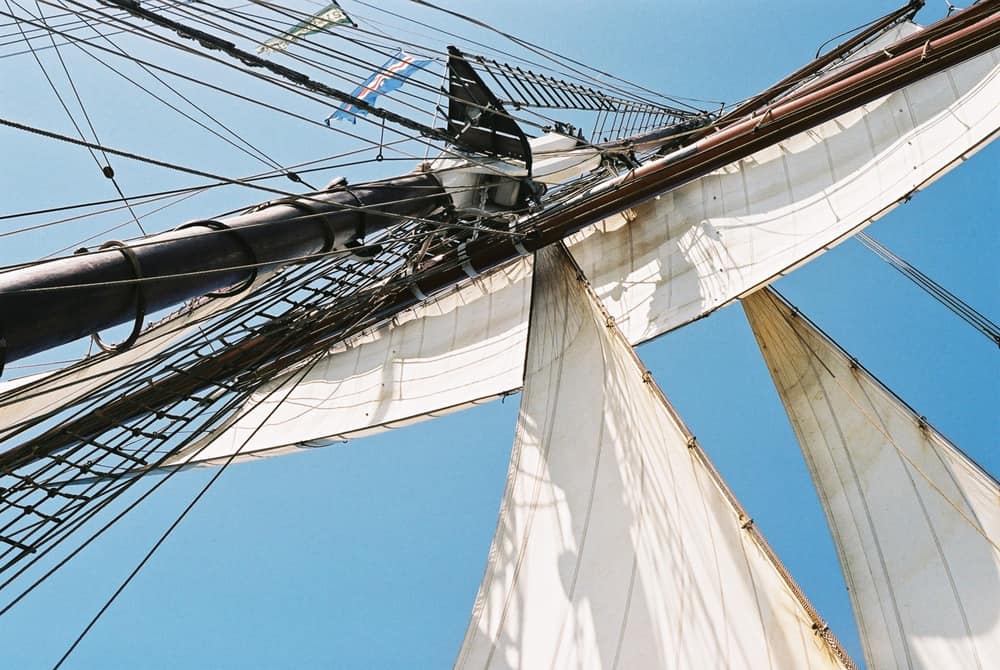
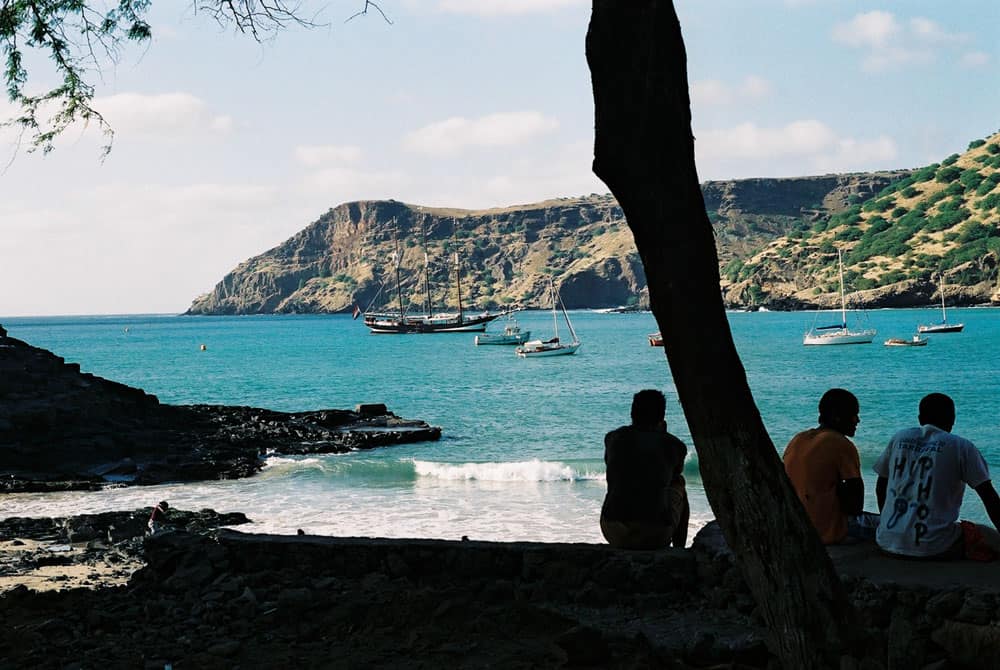
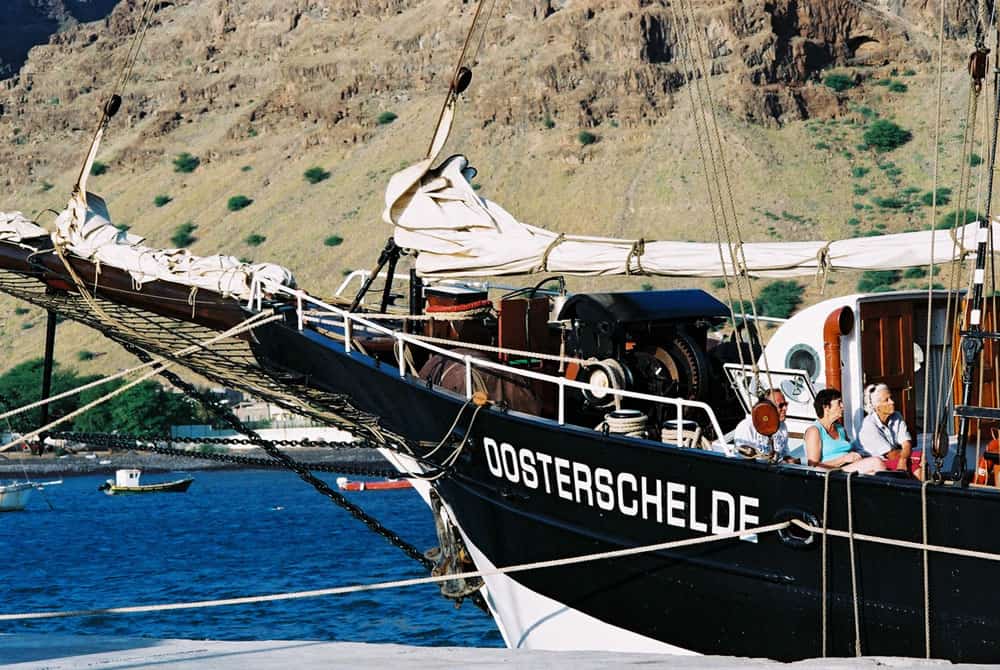
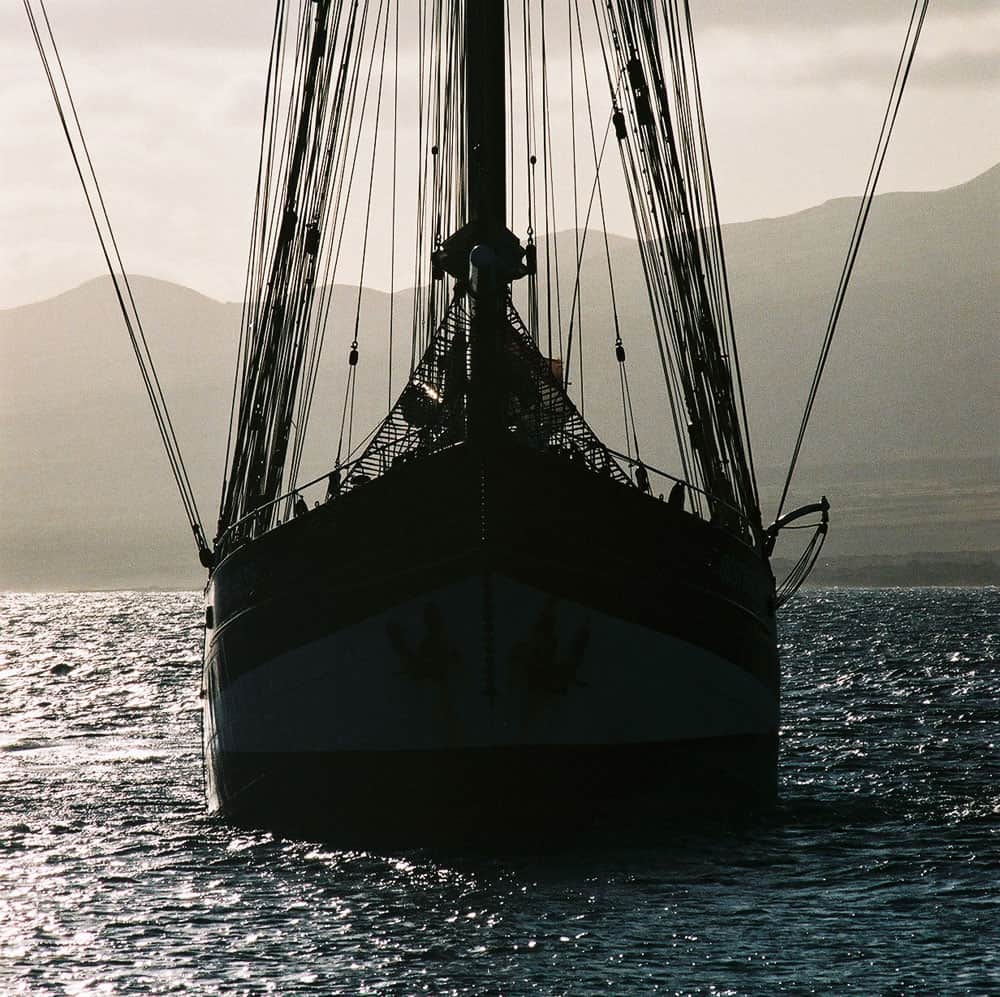
Three Masted Topsail Schooner Oosterschelde in action and images. Photos from Classic Sailing customers, ships crew and professional photographers. We hope it gives a flavour of her sailing, life on board, the people that come, her beautiful sailing grounds and what it is like to live below decks.