
| Embark | Disembark | Vessel | Duration | Voyage No |
|---|---|---|---|---|
| Sat 24-04-2027, 16:00Sète, France | Sat 01-05-2027, 10:00Lisbon, Portugal | Santa Maria Manuela | 7 Nights | SM240427 V13 |
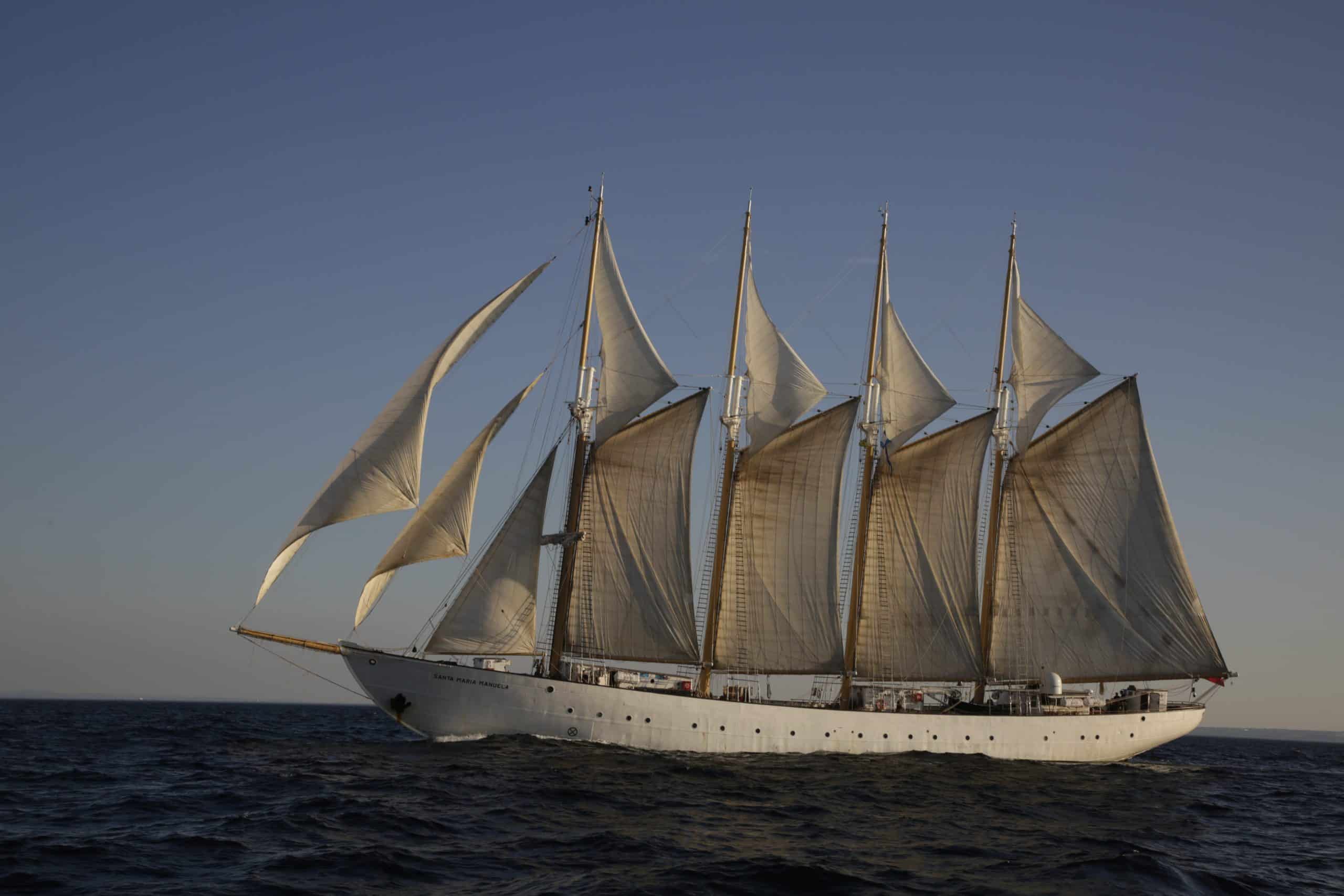
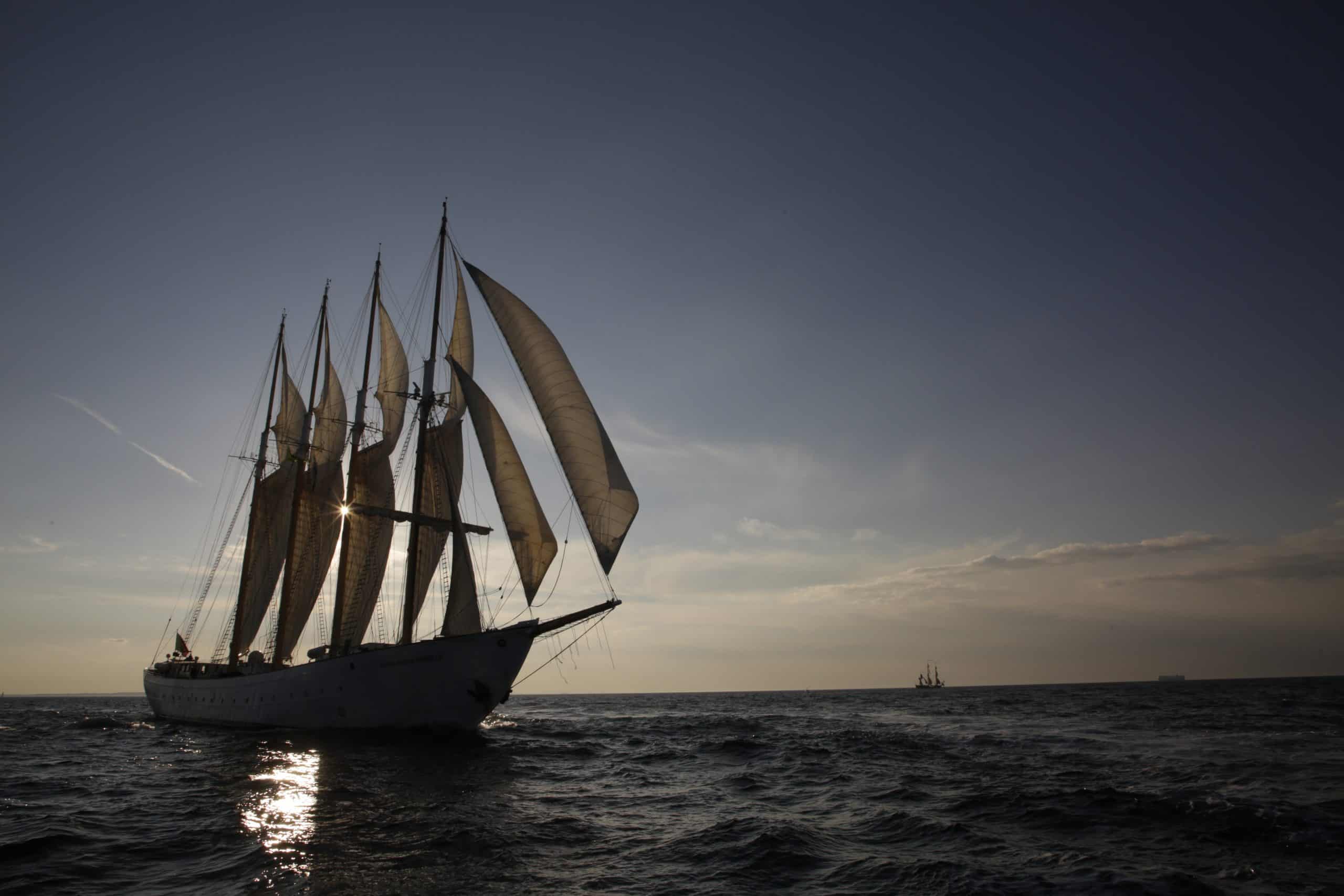
A seven-night repositioning passage aboard the four-masted schooner Santa Maria Manuela, from Sète, France to Lisbon, Portugal. The ship travels mainly under engine, raising sail only when the wind is favourable.
Stand watches around the clock, steer a 68-metre schooner built in 1937 for the Portuguese cod fishing fleet, and keep lookout as the ship crosses the Gulf of Lion and follows the Spanish coast. The high point is the Strait of Gibraltar, with its busy shipping lanes, dolphins and spring bird migration.
The passage ends in the Atlantic, up the River Tagus past the Belém Tower to Lisbon, the city where Santa Maria Manuela was launched 90 years earlier.

| Vessel type / Rig | Gaff Schooner |
| Guest Berths | 50 |
| Beam | 33ft |
| Draft | 18ft |
| Deck Length | 173ft |
| Overall Length | 225ft |
| Tonnage | 992 tons |
| Year Built | 1937 |
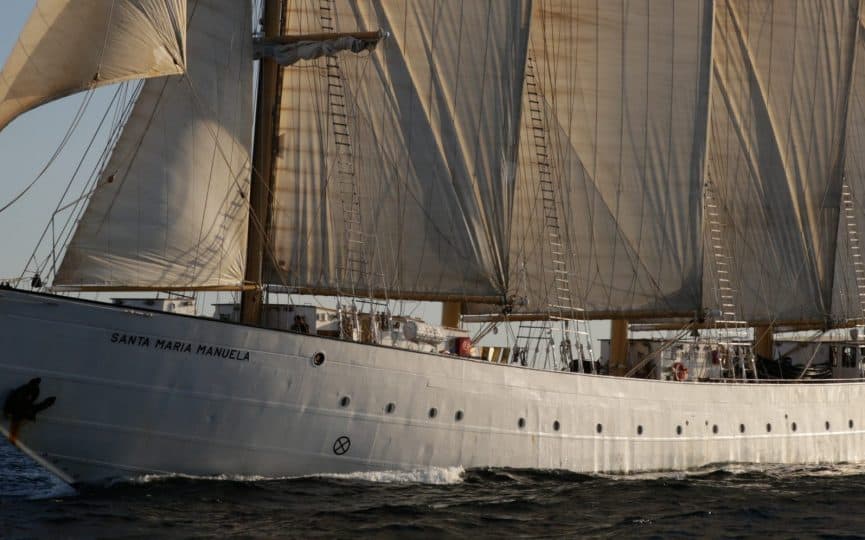
This Sète to Lisbon tall ship voyage is a seven-night passage aboard Santa Maria Manuela, a four-masted schooner built in Lisbon in 1937 for the Portuguese cod fishing fleet. You join her in Sète, France, and leave her in Lisbon, Portugal, after around 1,000 nautical miles that take you out of the Mediterranean and into the Atlantic through the Strait of Gibraltar.
Please be clear about one thing before you book. This is a repositioning voyage. The ship has to reach Lisbon on schedule, so she will travel mainly under engine, and the sails go up only when the wind is favourable for the course. What you get in return is a long stretch at sea, a proper watch routine, the Strait itself and an arrival up the River Tagus into the city where she was launched. It suits people who want sea miles and time at sea, rather than a sailing holiday with sails set every day.
On a Sète to Lisbon tall ship passage you can expect seven nights at sea in a working watch system, mostly under engine. You will steer, keep lookout, help raise sail when the wind allows, pass through the Strait of Gibraltar and arrive in Lisbon by river.

Leaving Sète in the late afternoon, Santa Maria Manuela heads south-west across the Gulf of Lion and down the Spanish coast towards the Alboran Sea. Most of this distance is covered under engine, at a steady pace that keeps the ship to her schedule. That changes the days at sea rather than taking them away. You still stand watches, steer a 68-metre schooner, keep lookout for shipping and wildlife, and see how the crew run a large vessel around the clock. Depending on the captain’s routing, you may see the Spanish coast and the Balearic Islands, then Cabo de Gata, the dry south-east corner of Spain, before the coasts close in towards Gibraltar.
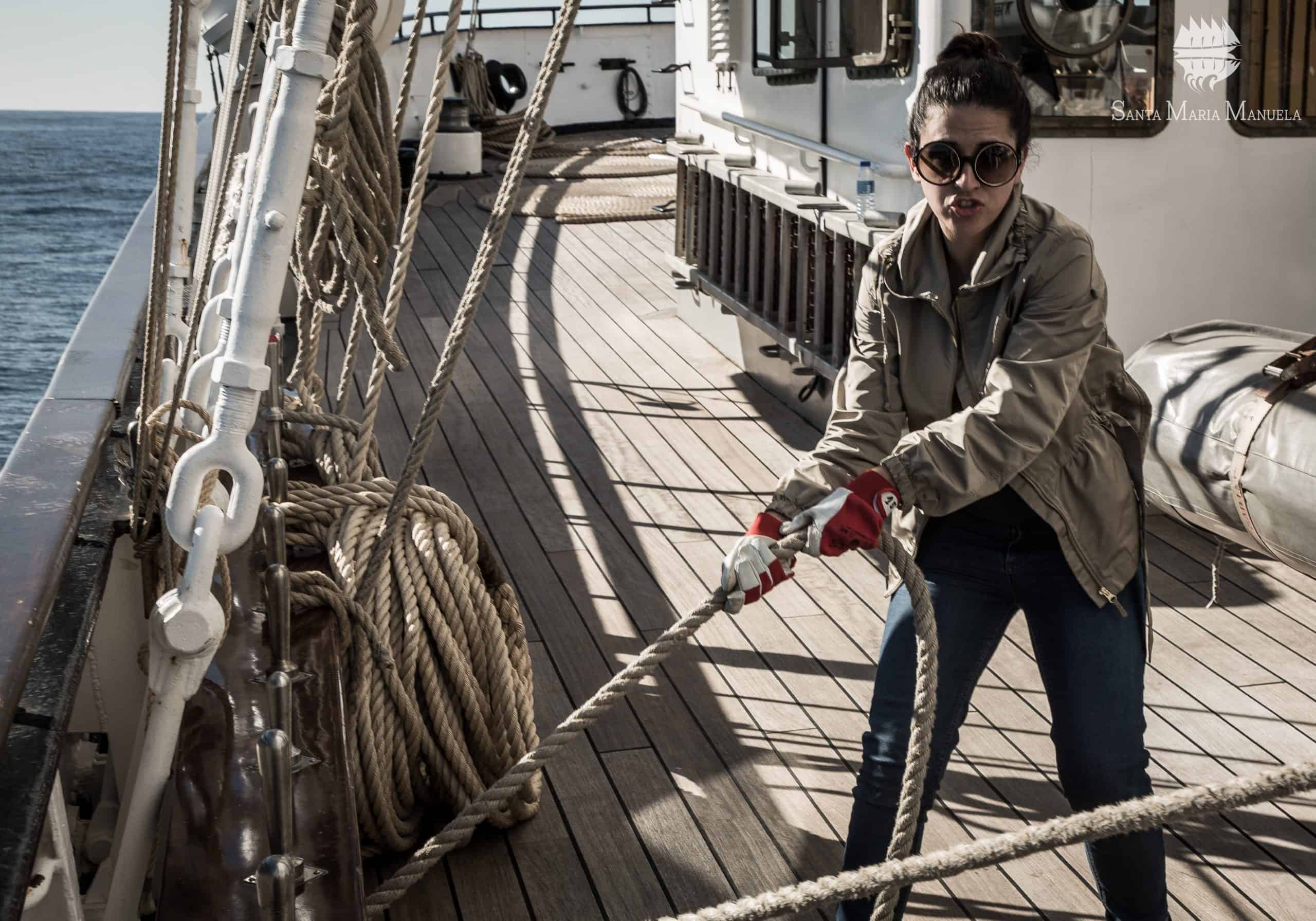
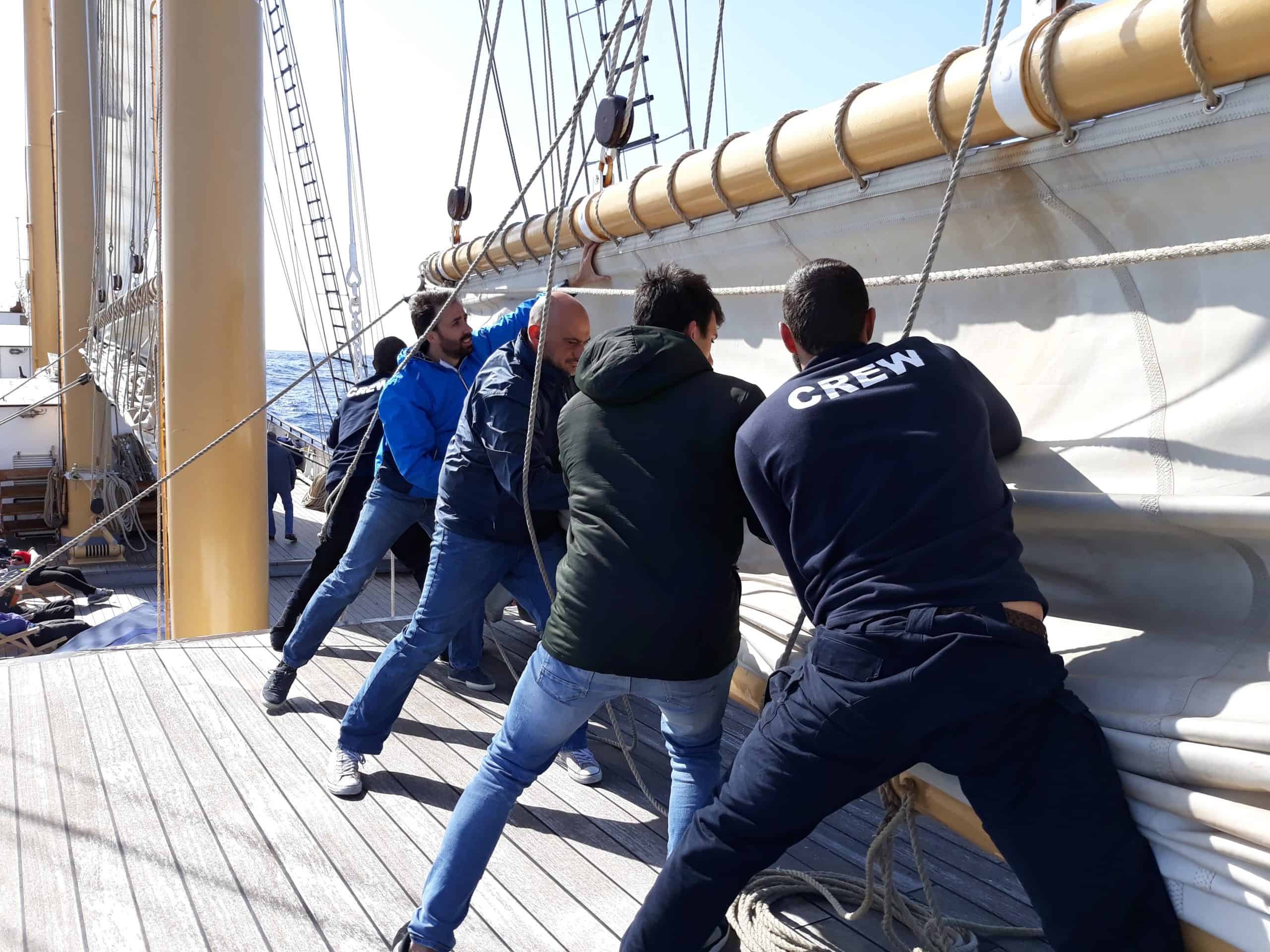
If the wind comes from a useful direction, the crew will raise sail and guests take a full part in hauling and handling the lines. Whether that happens on this passage depends on the weather, and nobody can promise it in advance. Treat any sailing as a bonus, not the purpose of the trip. Even under engine, the crew keep the ship ready to sail, and they will explain the rig and how each sail is handled, so you understand what you are looking at.
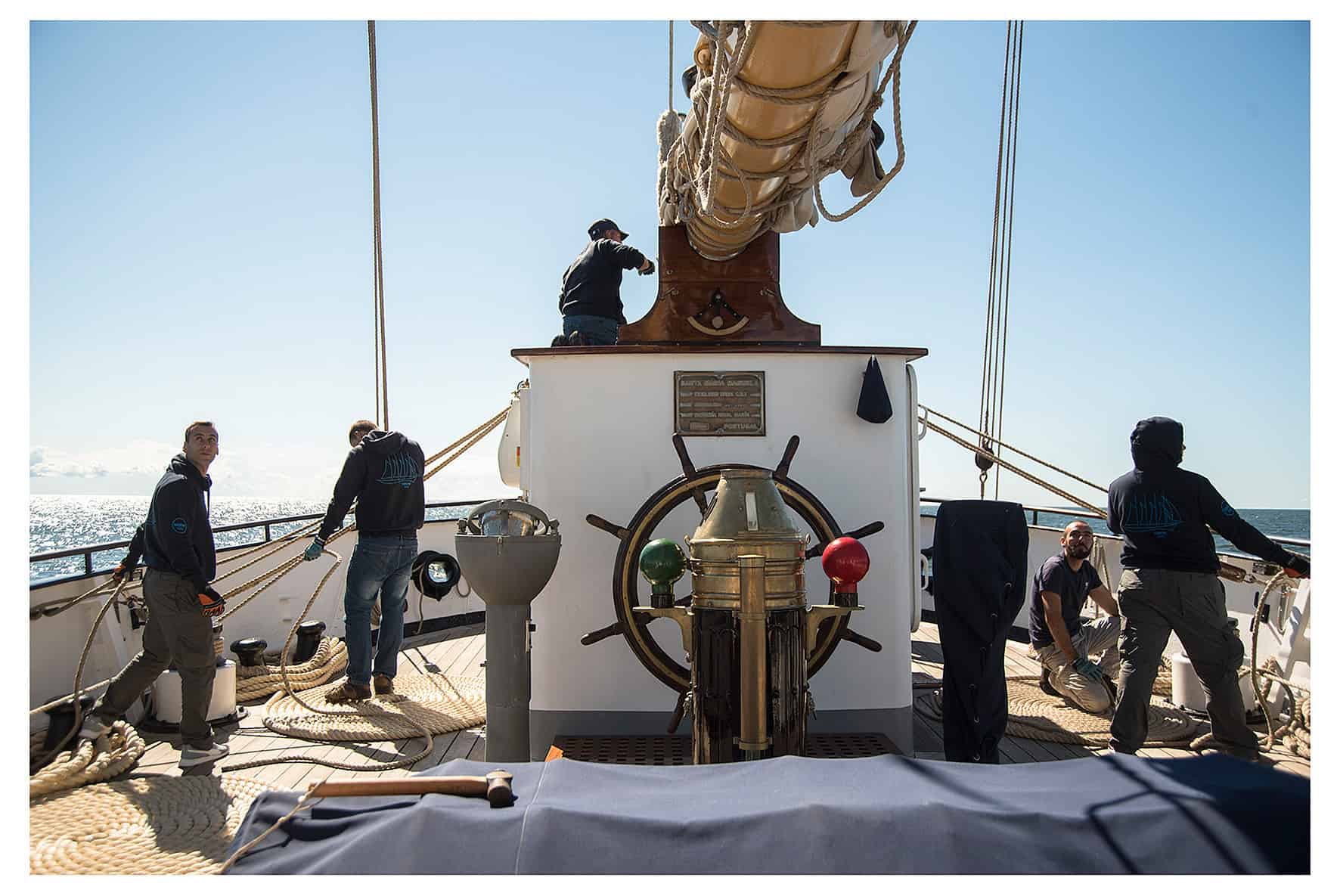
Guests are split into watches, so each team shares the steering, lookout and running of the ship for set periods of the day and night. Night watches are often the part people remember: the deck lights low, the compass lit in front of you, and the lights of other ships to identify and report to the officer of the watch. Each watch has a crew member in charge, who shows you how to steer by compass, how to identify and report a ship’s lights and how to make an entry in the log.
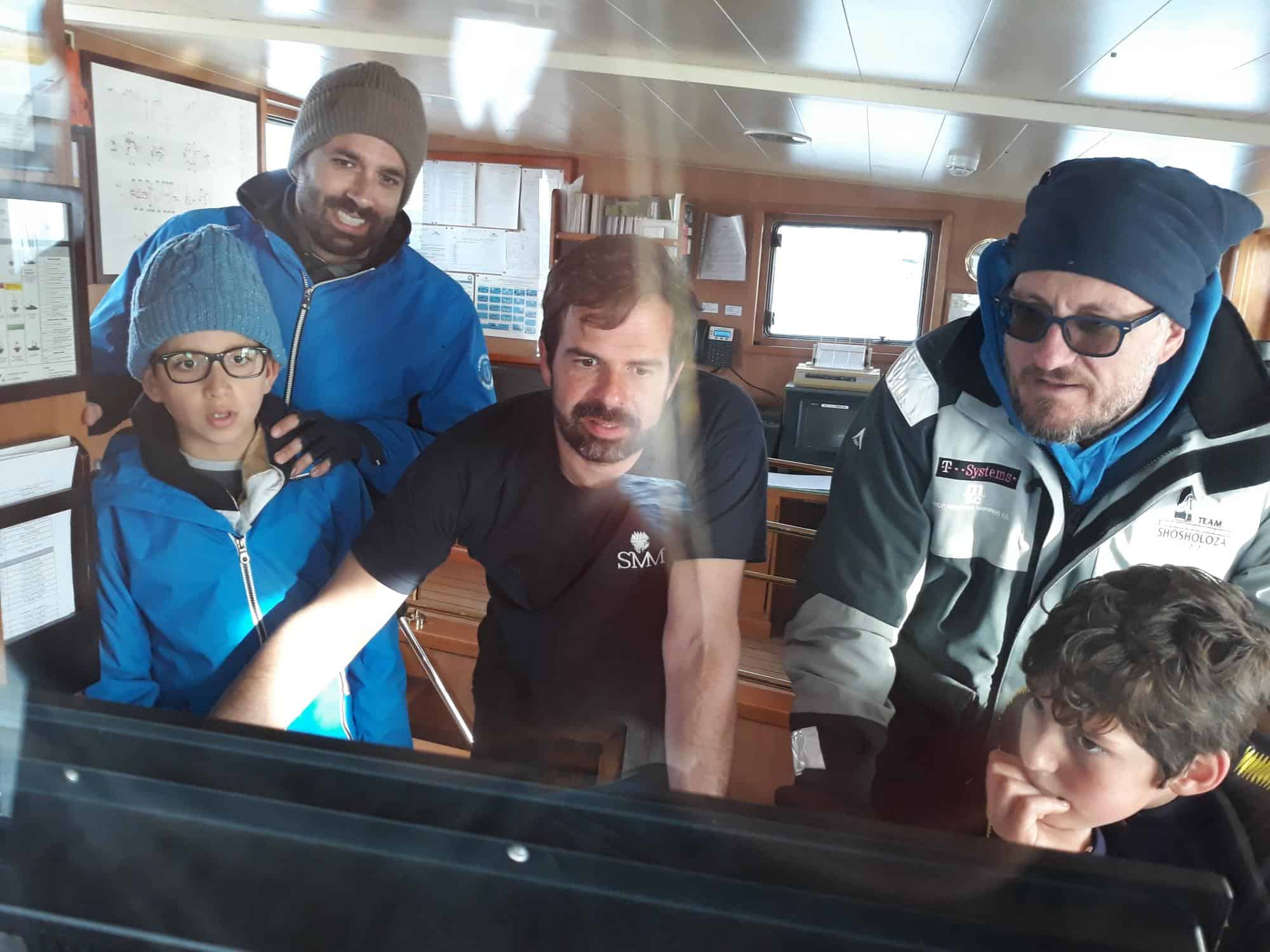
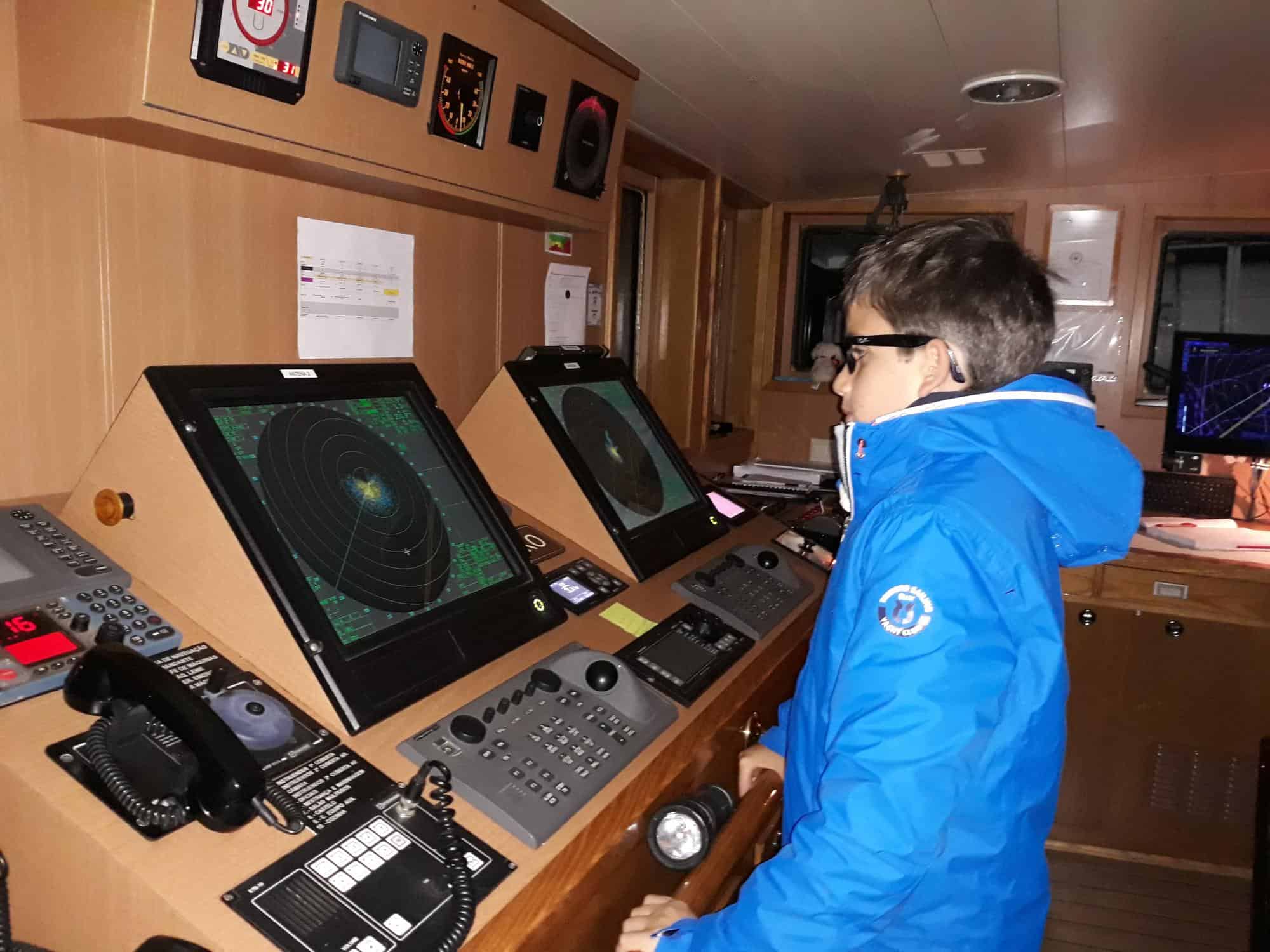
The crew explain how they plan the route and interpret weather forecasts, and you can watch them plot the ship’s position and ask questions as they go. The chartwork itself is done by the professional crew. Time off watch is your own, for sleep, reading on deck or talking to the crew about the ship.

The Strait of Gibraltar is the centre of the voyage. At its narrowest, the gap between Spain and Morocco is under eight nautical miles, and it carries some of the busiest shipping in the world in organised traffic lanes. Passing through on a tall ship shows you how a large vessel works through that traffic, with the watch tracking ships on radar and by eye.
Depending on timing, you may pass the Rock of Gibraltar and the Moroccan mountains in daylight, or at night when the lanes become a moving pattern of lights. West of the Strait the sea changes. The Atlantic swell is longer and the water cooler, and you feel the difference in the way the ship moves. For many guests it is the first time they have seen two continents from the deck at once.
Late April usually brings mild spring days and cool nights. In the western Mediterranean, daytime air temperatures are often in the high teens Celsius and the sea is still cool, around 15 to 16°C. The Gulf of Lion can produce strong north-westerly winds (the tramontane), and the Strait has its own easterly and westerly winds that funnel between the two continents. April can also bring calm days, with long flat stretches that show why the engine matters to the schedule.
Once round Cape St Vincent and heading north for Lisbon, the ship often meets northerly winds on the nose, which is one reason this passage is planned mainly under engine. It can feel noticeably cooler on deck at night and in the Atlantic, so bring layers, a warm fleece and a windproof, waterproof jacket.
The itinerary is subject to weather conditions and the captain’s discretion. The joining time in Sète and the leaving time in Lisbon are firm.
Sète, on the Languedoc coast of France, is a working fishing port built around canals between the Mediterranean and the Étang de Thau lagoon. Arrive a day early if you can. Walk up Mont Saint-Clair for the view over the port and lagoon, try the local tielle (a spiced octopus pie) and eat oysters from Bouzigues on the lagoon shore. From the UK, the nearest airport is Montpellier, around half an hour by road, or you can travel by train through Paris. See our port guide for full travel details. Sète station is on the main line from Paris, a short taxi ride from the quays.
Lisbon, Portugal, is one of the few European capitals you reach by ship up a river. Santa Maria Manuela comes in from the Atlantic, up the Tagus estuary, past the Belém Tower and under the 25 de Abril Bridge. It is a fitting end for a ship launched on the Lisbon waterfront at Alcântara in May 1937. You leave the ship at 10:00, which leaves most of the day for the city if you have not booked an early flight home. Arriving by sea also gives you the best first view of the city: the waterfront, the hills of the old town and the castle above them.
Belém, a short tram or taxi ride along the river, has the Jerónimos Monastery, the Monument to the Discoveries and the Navy Museum, which covers Portugal’s long history at sea. In the old centre, the steep streets of Alfama and the yellow trams up to the castle are worth a day on their own.
Anyone interested in the ship’s past should consider the Ílhavo Maritime Museum near Aveiro, a train journey north of Lisbon, which tells the story of the cod fishing fleet she belonged to. Check for Portuguese public holidays around your arrival, as some shops and museums close or open shorter hours. There are frequent direct flights from Lisbon to London and to UK regional airports.

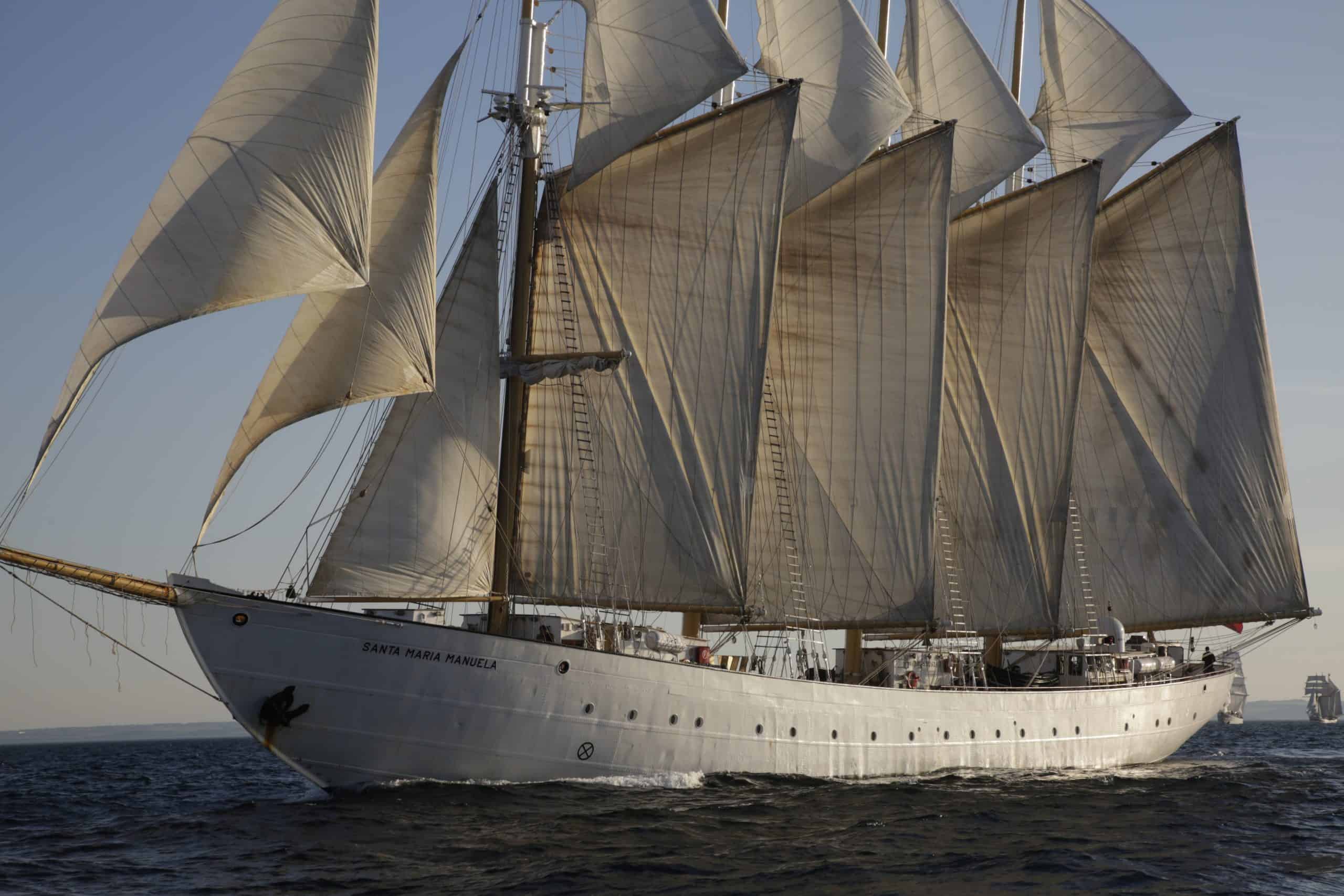
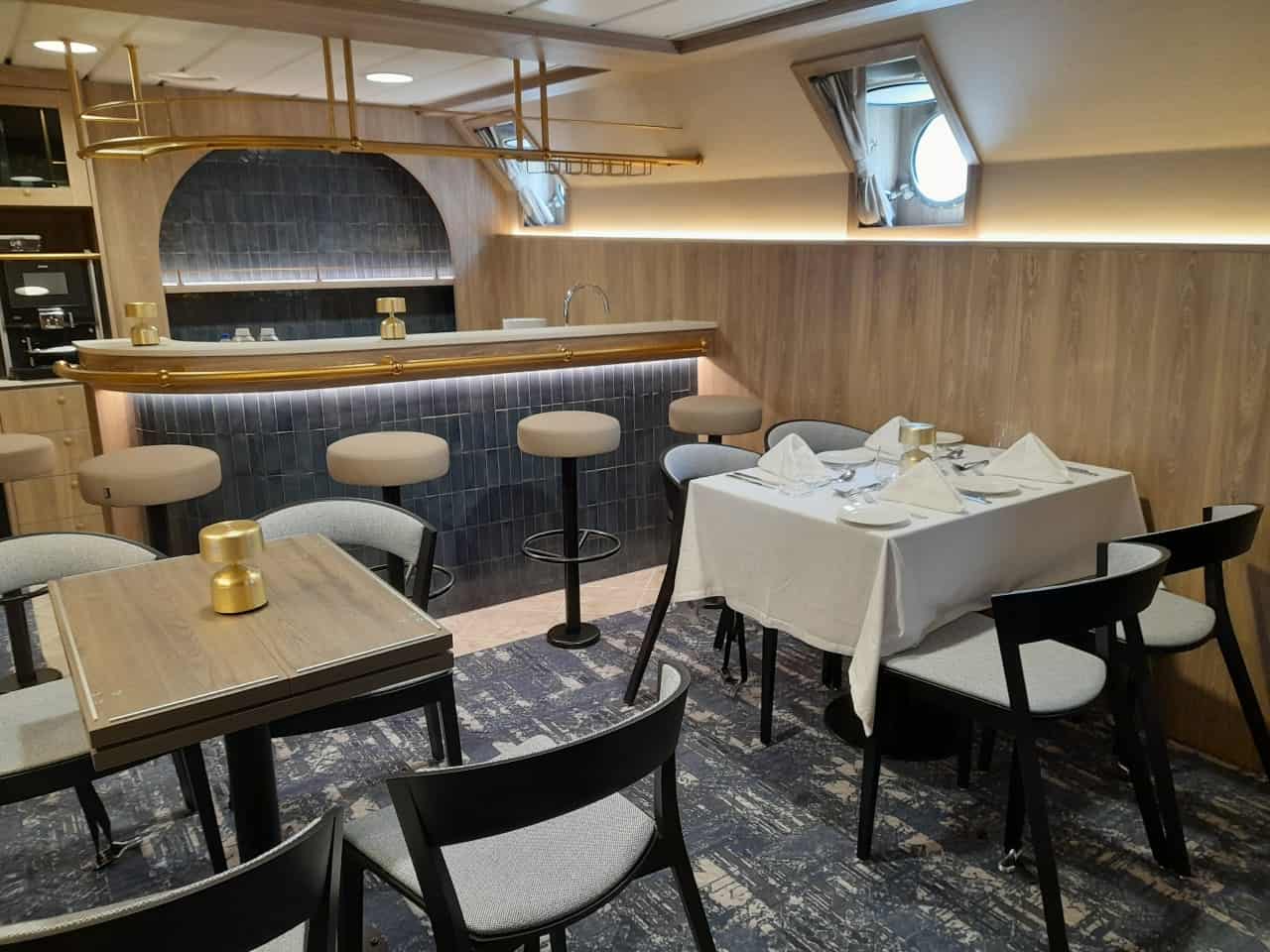
Santa Maria Manuela has been rebuilt for guests, most recently with a full comfort renovation in 2022, while keeping the steel hull and four-masted rig of a deep-sea cod schooner. She is a large ship by traditional standards, 68 metres overall, with a professional crew of around 18 who run the ship, the galley and the hospitality. Her deck is long and open, with room to sit out of the way when you are off watch, and there is a saloon below for meals and bad weather. Under engine she moves steadily, with a slower, heavier motion than a small boat, which many guests find easier to live with on a long passage.
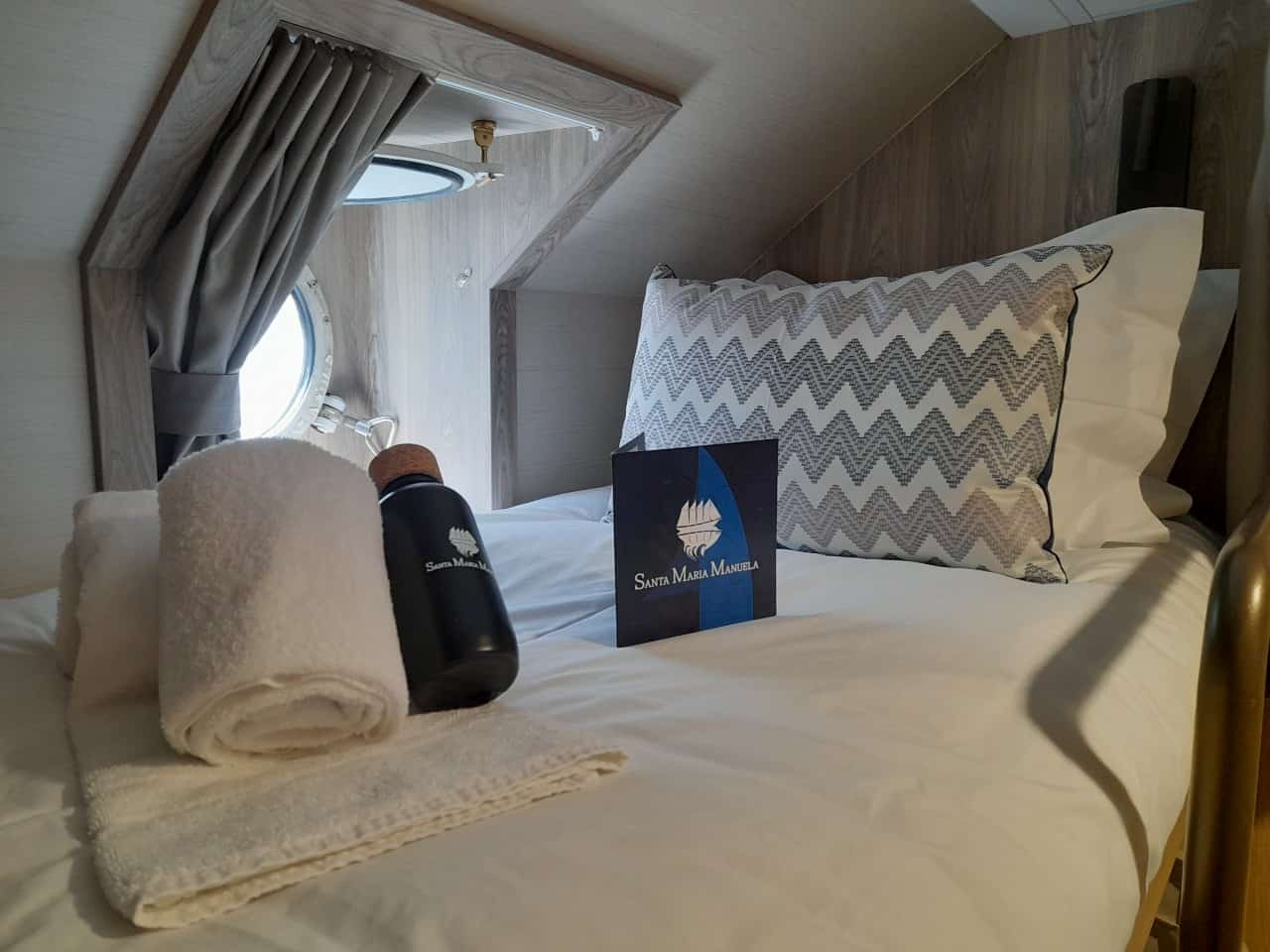
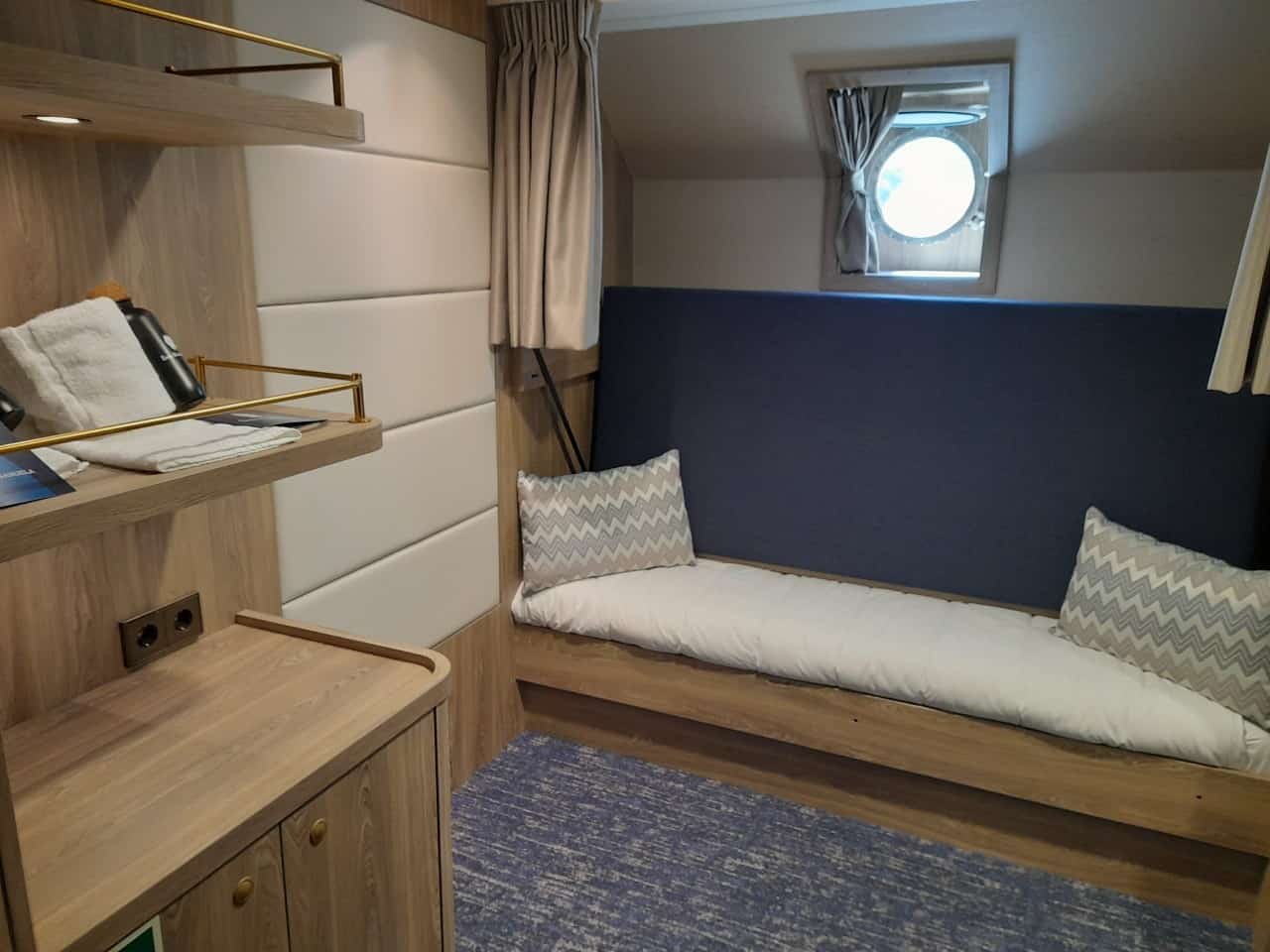
Every cabin has a private bathroom and shower, which is unusual on a tall ship and makes a real difference over seven nights. Choices range from communal cabins of four or six bunks, divided by gender, through bunk-bed cabins for one or two, to double-bed cabins and a master cabin. Solo travellers can book a berth in a shared cabin, which offers both economy and company, or take a cabin on their own with a single supplement. Beds are 1.85 metres long, worth knowing if you are tall.
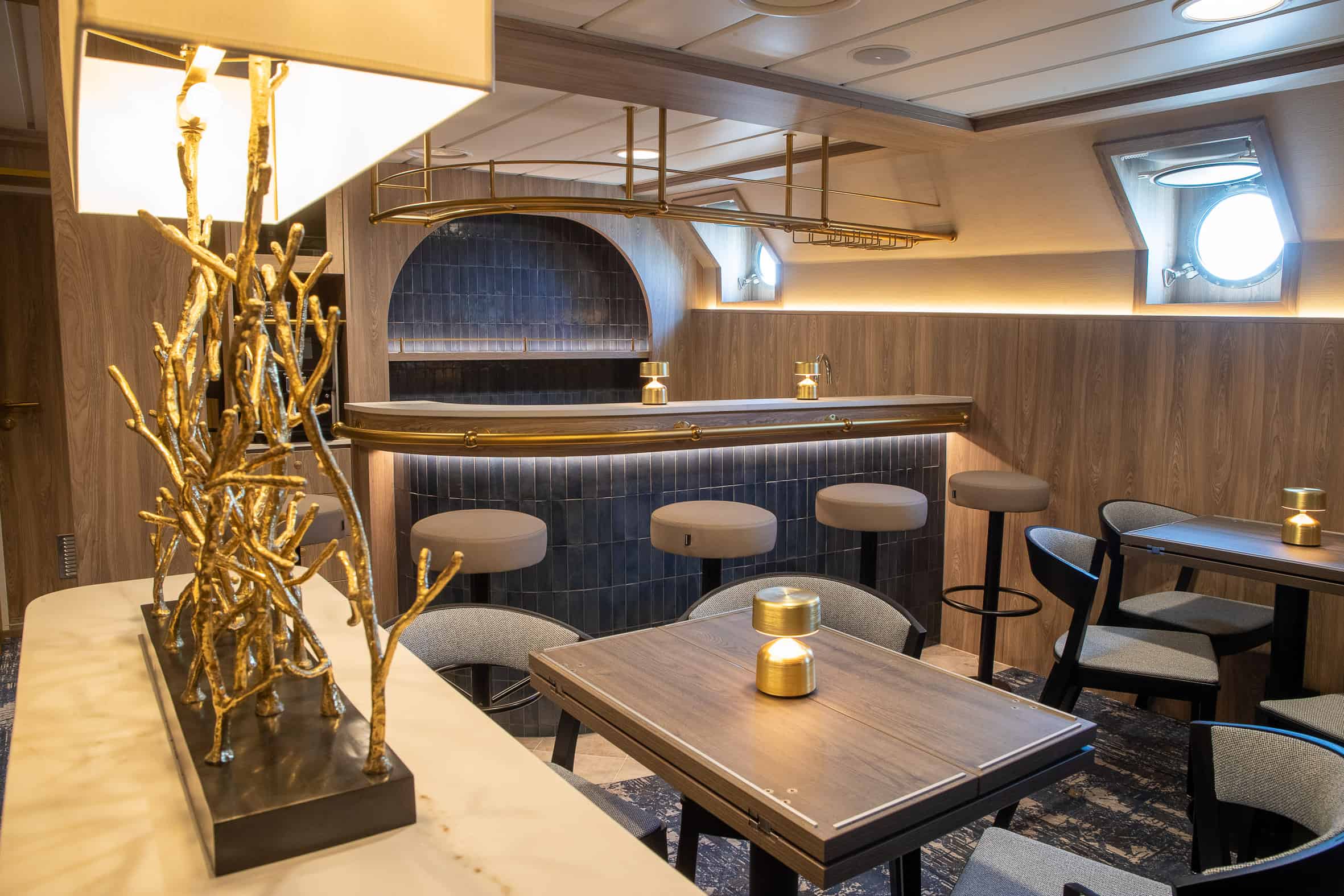
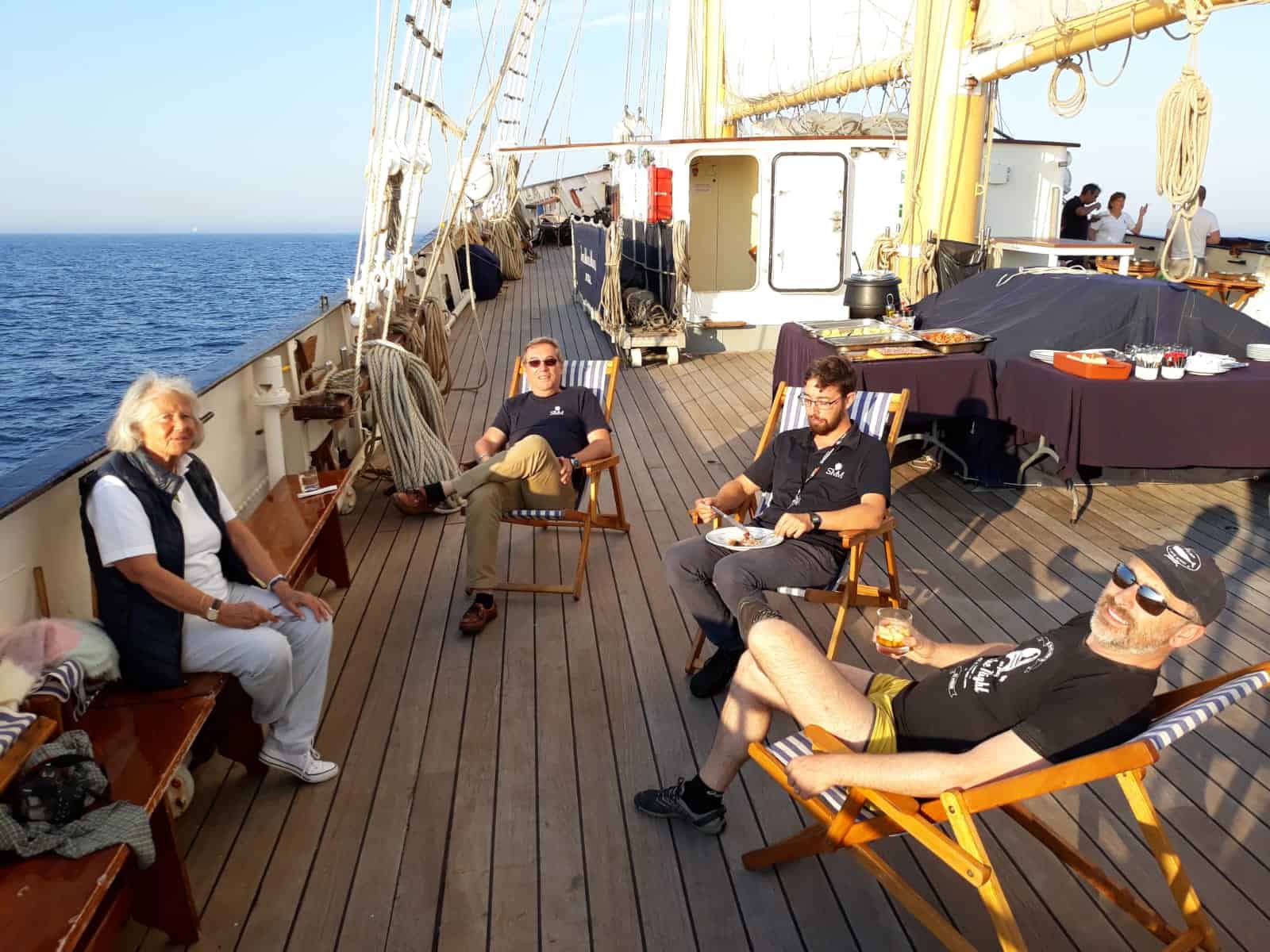
The day is set by the watch system. Meals are cooked fresh by the galley team and eaten together, so you get to know the crew and the other guests quickly. Between watches there is time to sleep, read, or sit on deck and watch the coast go by. There is a bar on board, and personal bar bills are paid separately. The crew explain your watch times, and how they rotate, when you join.
The crew give a full safety briefing when you join, covering lifejackets, harnesses, emergency stations and moving safely around the deck. A crew member is on watch with you at all times.

Most guests on Santa Maria Manuela have not sailed before. A passage like this usually draws a mix: people who want to build sea miles, people curious about life on a long passage, and experienced sailors who want a week offshore without having to plan and skipper it themselves. Solo travellers are common on these voyages, with shared cabins available and a naturally social atmosphere developing among guests and crew. Ages and backgrounds vary widely, and that mix is part of what makes a long passage work.
If someone at home is uneasy about you spending a week at sea, the practical answers are reassuring: proper beds, your own bathroom, fresh meals every day, a professional crew and flexible participation. Ask our team how you can stay in touch with home during the passage.
Late April falls in the spring bird migration across the Strait of Gibraltar, when birds of prey, storks and other migrants cross from Africa into Europe. On a clear day you may see them over the water near the Strait. Dolphins are often seen in the Alboran Sea and the Strait, and pilot whales live in the Strait year round, though no sighting can be promised. Shearwaters and gannets are common along the Spanish and Portuguese coasts. Off the Portuguese coast, Cory’s shearwaters are often seen skimming low over the swell.
Bring binoculars. A week of regular lookout watches gives you far more time on deck, and more chances to see wildlife, than a short trip. Night watches away from shore lights are also the best time to see the stars on a clear night.
Santa Maria Manuela was launched in Lisbon in 1937, on the same day as her sister ship Creoula, for the Portuguese White Fleet that fished cod on the Newfoundland Banks and off Greenland. The fishermen worked alone from small dories launched from the schooner, hand-lining for cod over months at a time. She fished for around 50 years before being laid up, and was later rebuilt as a sail training and passenger ship.
Arriving in Lisbon brings her back to the city where she was built. For British guests, the route also follows the track of generations of Royal Navy and merchant ships that passed Gibraltar and Cape St Vincent on their way to and from the Mediterranean.

No previous sailing experience is required, as the professional crew will teach you everything from basic rope handling to sail handling at a pace that suits you. On this passage most of that practice comes from steering, lookout and watchkeeping, with sail handling when the wind allows.
The physical demands are moderate, with tasks suited to various fitness levels, and you’re always free to participate as much or as little as you choose. You will need to manage steep ladders between decks and move around a deck that can roll in an Atlantic swell. If you have any concerns about mobility, speak to our team before booking. Climbing the rigging, if offered, is always optional and done with a harness under crew supervision.
All meals, accommodation, safety equipment, and instruction and guidance from the crew are included. Travel to Sète and home from Lisbon is not included, and nor is travel insurance, which is required. Bar bills are extra.
You join in Sète at 16:00 and leave in Lisbon at 10:00. These times are firm, so book travel with a margin, particularly if you plan to fly home from Lisbon on the day you arrive. Arriving in Sète the day before means you can join without rushing.
With seven nights aboard, the voyage fits within a standard two-week holiday allowance, leaving time either side for Sète and Lisbon. Compare the cost per day with a good hotel, then add all your meals and a week at sea through the Strait of Gibraltar. The price reflects the style of the voyage.
If you sail your own boat, this is offshore time you would struggle to get on it: a week of watchkeeping on a 68-metre schooner, a passage through one of the busiest straits in the world, and a professional crew handling the planning, provisioning and maintenance. You arrive, stand your watches and leave in Lisbon with the miles in your logbook.
Even large ships move in the Gulf of Lion and the Atlantic. If you are prone to seasickness, bring your preferred remedy and read our guide to seasickness before you travel. Pack layers, a warm fleece, a windproof waterproof jacket, soft-soled non-slip shoes, a hat, sun cream and a head torch with a red light for night watches. Most people find the first day or two the hardest, and settle once the watch routine takes over.
Classic Sailing has connected guests with traditional sailing experiences for over 30 years and works only with tall ships and traditional vessels, never modern yachts. This voyage sits within our ocean passages, a shorter way to find out whether a week at sea suits you before trying a longer crossing. We also offer RYA courses and daysails if you want to build skills closer to home.
Voyages and people vary; we are here to help you find the voyage that best suits you. See available dates and cabin options, or speak with our team about any questions.
“Sète is the most fascinating small town on the French Mediterranean coast precisely because it doesn’t go out of its way to be charming. It doesn’t have the time. This is an attractive – but serious – port full of working people with stuff to ship out and turbot to sell.” Anthony Perigrine, Telegraph Travel
Lisbon is a city steeped in maritime history. The Maritime Museum and the Jerónimos Monastery are a nod to Portugal’s illustrious sea voyages. For history buffs, the Alfama district is a labyrinth of narrow streets, capturing Lisbon’s Moorish past.
Fado music often wafts through the air as you navigate the city’s hilly streets. If you find yourself here in June, you’ll catch the vibrant Festas de Lisboa, featuring a parade of colourful sardine floats.
We had the most amazing time. The crew were so friendly and helpful, the food was great throughout, and the cabins were really comfortable. We both climbed the rigging as the sun was setting over Porto Santo to round off a brilliant last day with the new friends we met. Thanks for the wonderful experience.
Ian & Dayna
I have sailed many times on tall ships, this is by far the best yet.
Richard
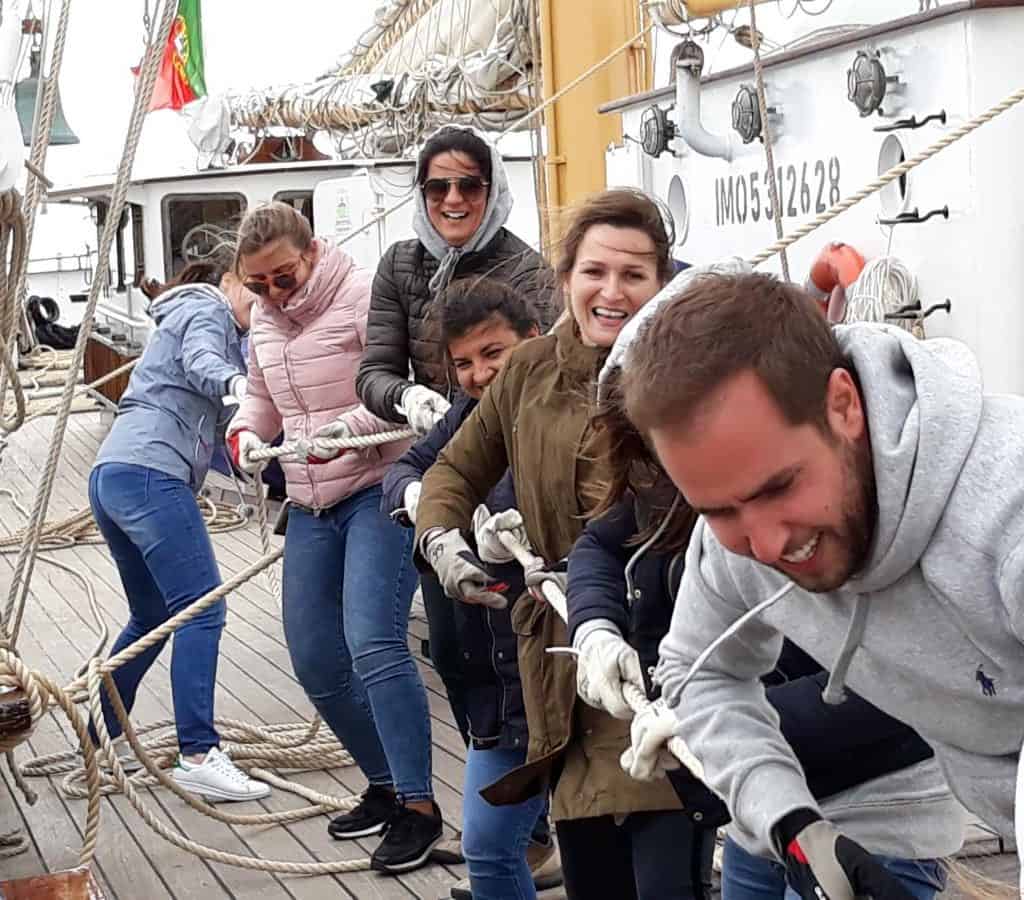
Terrific crew and ship and a lovely passage to the Azores. Crew and guests were very good and patient with someone who only spoke English. This is a terrifically well run vessel. Excellent accommodation, well serviced by a professional crew. All very friendly, helpful and willing to give information throughout. Many opportunities to get involved in most aspects of the ships operations. Very many thanks.
Keith
An amazing ship and amazing crew.
David
We had a terrific and adventurous time on board during Sachsen Sail in the Bay of Biscay. Thank you to all Santa Maria Manuela crew members!
Mario
Un voilier merveilleux avec un équipage très sympathique. Merci pour tout.
A splendid ship with a very kind crew. Thank you for everything.
Marie-Francoise












3 nights - Sea staff familiarisation and an intensive boat handling course open to all
Embark
Tue 06-04-2027
Smugglers Cottage, Tolverne
Disembark
Fri 09-04-2027
Smugglers Cottage, Tolverne

From
£599
Barcelona to the Balearic Islands, 5 nights SM050427 V08
Embark
Mon 05-04-2027
Barcelona
Disembark
Sat 10-04-2027
Palma, Mallorca, Spain

From
€950.00
Palma to Le Spezia, 5 nights, SM100427 V09
Embark
Sat 10-04-2027
Palma, Mallorca, Spain
Disembark
Thu 15-04-2027
La Spezia, Italy

From
€950.00
Recently Viewed Voyages
Sete to Lisbon, 7 nights, SM240427 V13
Embark
Sat 24-04-2027
Sète, France
Disembark
Sat 01-05-2027
Lisbon, Portugal

From
€735