
Ocean Passages of the World – The Reality of Sailing Far from Land
No land in sight!
What does it mean to leave the land behind? Not for a short break, but for days or weeks with only sea on the horizon? When you commit to a long ocean passage, you plan for a different world. It doesn’t matter if you’re crossing the Atlantic or just sailing a long, exposed stretch of ocean—the challenges are real, and so are the rewards.
It’s not a holiday in the conventional sense. There’s no internet, no quick escape, no option to switch off from the work of sailing. You’ll likely arrive at your end port changed, though not in any way you can predict. For many, it’s the experience that makes them a sailor for life.
Ocean passages of the world.


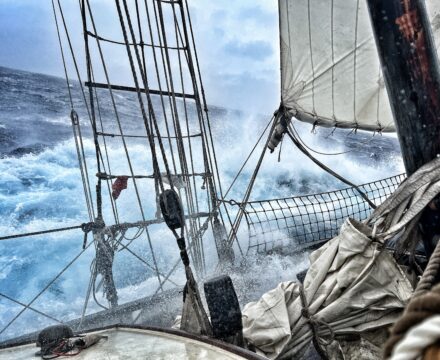
Beyond the Horizon
You don’t need to cross an entire ocean to understand its scale. A passage from Iceland to Ireland, from the Canaries to the Azores, or from England to Spain will teach you most of what you need to know. The weather can be rough or calm, warm or cold, and never quite what you expected.
What links all ocean passages is time. They aren’t over in a day. It takes time to find your sea legs, time to settle into the ship’s rhythm, and time to appreciate just how much you’re adapting. You won’t know what sort of sailor you are until you’ve stood a night watch in a rising sea or shared the galley with someone you didn’t know three days ago but now trust completely.
A Sailor’s View
I’ve made several long passages—both warm and cold, relaxed and severe. The classic route of Cape Verde to the Caribbean aboard Grayhound was about as perfect as ocean sailing gets: steady trades, good food, flying fish, and a strong crew. I’ve also spent weeks sailing through the Southern Ocean, scanning for bergs and wondering when the sea would stop throwing itself at us.
The Daily Reality at Sea
Ocean sailing is structured by the watch system. Four hours on, four hours off. Or three hours. Or six. It depends on the ship. At first, you’re tired. You may be sick. Then, like magic, your body adapts. The clock stops mattering. You eat when you’re told, you sleep when you can, and you look forward to the small things: the perfect mug of tea, a hot meal at the end of your shift, keeping warm. The routine takes over, and many find it reassuring and a true relaxation of anxieties.



Wildlife
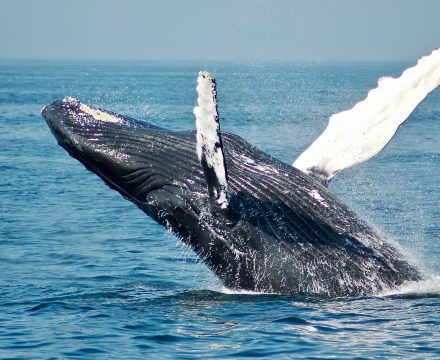
Wildlife at sea is never guaranteed, but when it appears, it tends to steal the show. When the sea is calm it is easier to see cetaceans and turtles. Dolphins are common—often appearing in schools of thirty or more to surf the bow wave, their agility and timing never failing to lift morale. Whales are rarer but unforgettable. You may hear the blow before you see the broad back of a fin whale, or the vertical fluke of a diving humpback. Some species are curious, circling the ship and surfacing close enough to hear them breathe.
When it’s rougher you will still be able to see Seabirds. Albatrosses are my favourite bird of all time and you can get to see them when you sail the Southern Ocean. With wingspans over three metres, they glide effortlessly for hours without a single wingbeat, never touching land for months at a time.
Some voyages bring daily sightings. Others, just a single unforgettable moment. Either way, they remind you how little of the ocean we truly see.
Why Sailors Live in the Moment
At sea, there’s no point thinking too far ahead. Sailors plan the next watch—what to wear, when to eat, who’s on deck. They plan the day by checking the weather. They keep the ship ready at all times because it has to be. But beyond that, the future doesn’t matter. There are no meetings, no to do lists, no inbox. You deal with the day as it happens. After the voyage? That can wait. On the Ocean you only live in the moment.
Working Together
On a long passage, the ship becomes a village. There’s no leaving. Teamwork is essential. You may start the voyage unsure of your role, but within a few days, you’ll be reefing sails in the dark and helming by the compass. That sense of shared purpose is one of the most valuable things you’ll carry ashore.
Modern comforts fade quickly. Internet withdrawal is real, but short-lived. You may need to be careful with water. Food gets simpler after the fresh stores go but freezers provide all the greens you need, no scurvy that’s for sure.


What Ocean Sailing Teaches You
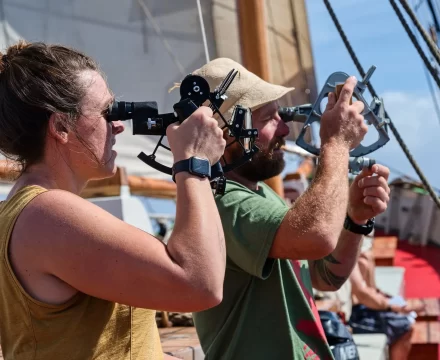
You gain perspective. You see weather as something to work with, not fear. You learn the ship’s motion—how to walk without staggering, how to sleep in a rolling bunk. If you’re interested, you’ll start to understand the sky—both for weather and navigation. Sextants, sun sights, and the deep satisfaction of doing it the old way still have their place.
You’ll also learn patience. Long-range sailing is full of unpredictability. Wind fails or gales may need to be ridden out. But if you want to strip life back to something elemental and useful, it’s hard to beat.
Trade Wind Sailing
The trade winds are steady east-to-west winds through the tropics. Tall ships used them for centuries to cross oceans, especially the Atlantic. These routes weren’t optional—they were the only way to get where you were going under sail. Modern ocean passages still follow them. If you want to sail the real trade wind route, it’s the same wind and the same sea today as it was then. Trade Winds
Are You Ready for an ocean passage of the world?
Most of our sailors aren’t professionals. They’re people who want to be part of something bigger than themselves. No experience is required—just commitment. You’ll be trained as you go and involved right from the start.
Ocean sailing isn’t always comfortable, but it’s real. And it’s a rare chance to live outside the noise of modern life, with time to think, work with your hands, and take your turn on the helm under stars as clear as you’ll ever see. Study the Milky Way in three dimensional glory.
If you’re ready for more than a taster, these are the voyages for you:
Ocean passages

